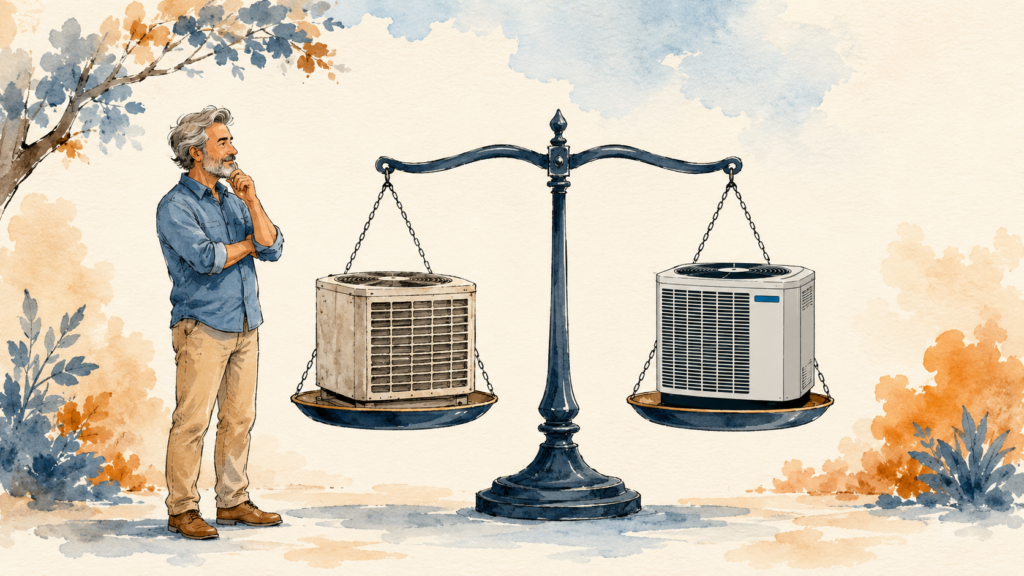
If you’re staring at an aging air conditioner and wondering whether to fix it one more time or finally replace it, here’s the short answer. When you decide to repair or replace ac equipment, the smart move usually comes down to three things: how old the unit is, how much the repair costs compared to a new system, and how often you’ve been calling for help. If your AC is under about 10 years old and the fix is small, repair it. If it’s past 15 years, needs a big repair, and has been quitting on you every summer, replacement is almost always the better call for an Elk Grove home.
Most homeowners here don’t want a lecture. You want to know if you’re throwing good money after bad. So let’s walk through how to decide, in plain terms, with the hot Sacramento Valley summer in mind.
The quick way to decide whether to repair or replace your AC
Start with age. A central air conditioner in our climate usually lasts 15 to 20 years when it’s cared for, but the math starts shifting once a system passes the 10 to 12 year mark. Before that, most problems are worth fixing. After that, every repair is a judgment call.
Then look at the repair in front of you. A worn capacitor, a bad contactor, or a clogged drain line is cheap and easy, and you fix those no matter the age. A failed compressor, a leaking coil, or a system that needs a big refrigerant recharge is a different story. Those are the repairs that make replacement worth a serious look.
Last, think about the pattern. One repair in ten years is normal. Two or three repairs in the last couple of summers is your AC telling you something. If you’ve been keeping a tired unit alive with yearly fixes, you’re likely spending more than a newer system would cost you to run.
Two simple rules that make the choice easier
HVAC pros lean on a couple of rough rules to sanity check the decision, and they’re handy for homeowners too. Treat them as guides, not gospel, because your situation always matters more than a formula.
The first is the 50 percent rule. If a repair would cost more than half the price of a brand new system, replacement is usually the wiser spend. A pricey fix on an old unit rarely pays off, because you’re pouring money into equipment that’s near the end anyway.
The second is the age times cost rule. You multiply the age of your AC by the repair quote. If the number lands low, repair makes sense. If it climbs high, replacement wins. A ten year old unit with a modest repair is worth saving. A seventeen year old unit facing a major repair is not.
Neither rule replaces a real diagnosis from a licensed pro. They just give you a gut check so you’re not deciding blind when a tech hands you a quote in the middle of July.
How old is your AC, really?
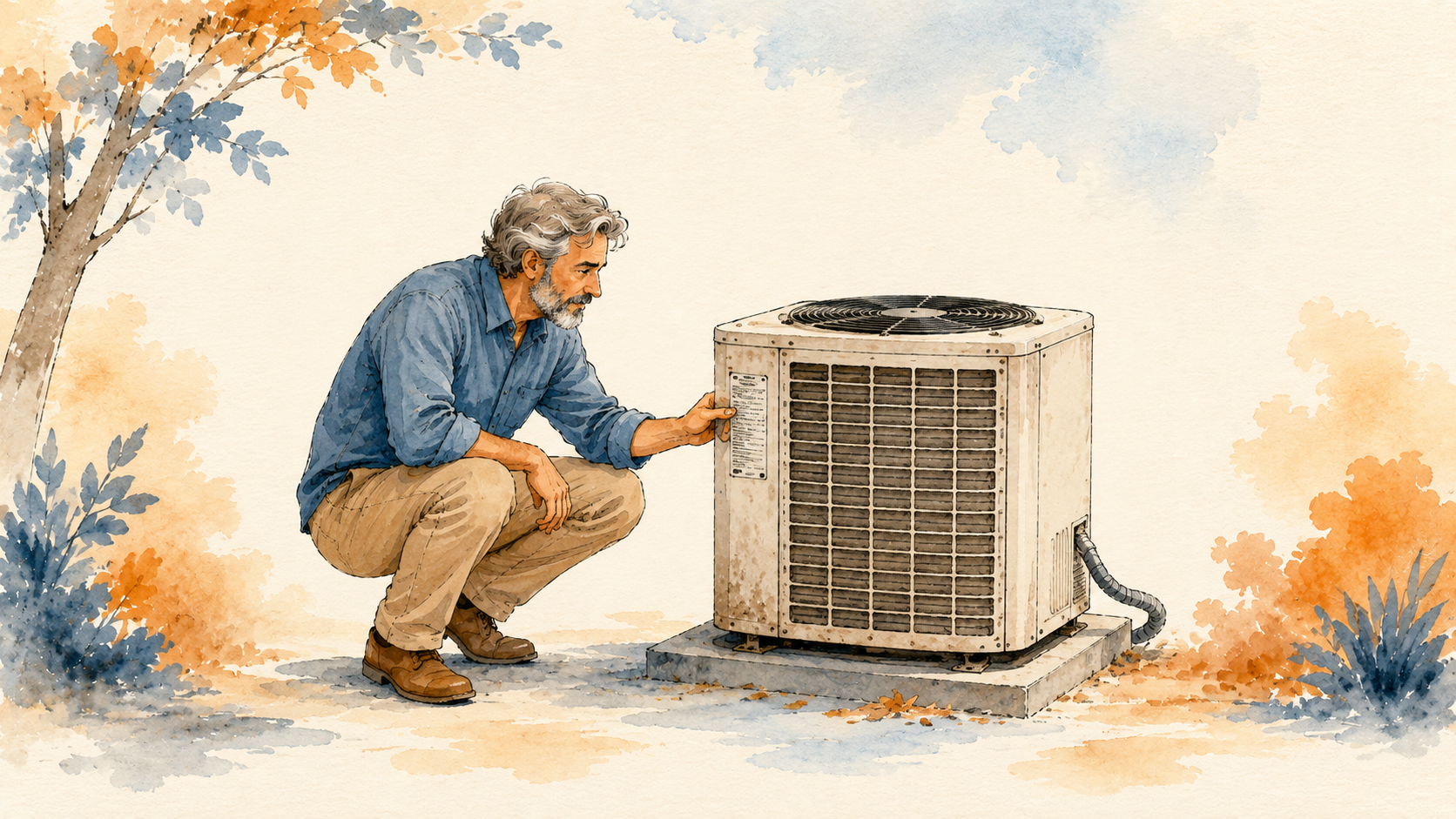
A lot of folks guess wrong on their system’s age, especially if you bought your Elk Grove home used and inherited whatever was already there. You can usually find the manufacture date on the label on the outdoor unit, or read it from the serial number. A quick call to a local pro can decode it for you if the sticker is faded.
Why does age matter so much? Because an older AC works harder to do the same job. Parts wear, coils get less efficient, and the whole system loses ground every year. An air conditioner that’s 15 years or older is at or near the end of its expected life, and that’s the point where sinking cash into repairs stops making sense.
Age also changes what a repair really buys you. Fix a five year old unit and you’ve got another decade ahead. Fix a sixteen year old unit and you might get one more season before the next thing breaks. You’re not just paying for the part. You’re betting on how much life is left.
The refrigerant change that affects older Elk Grove systems
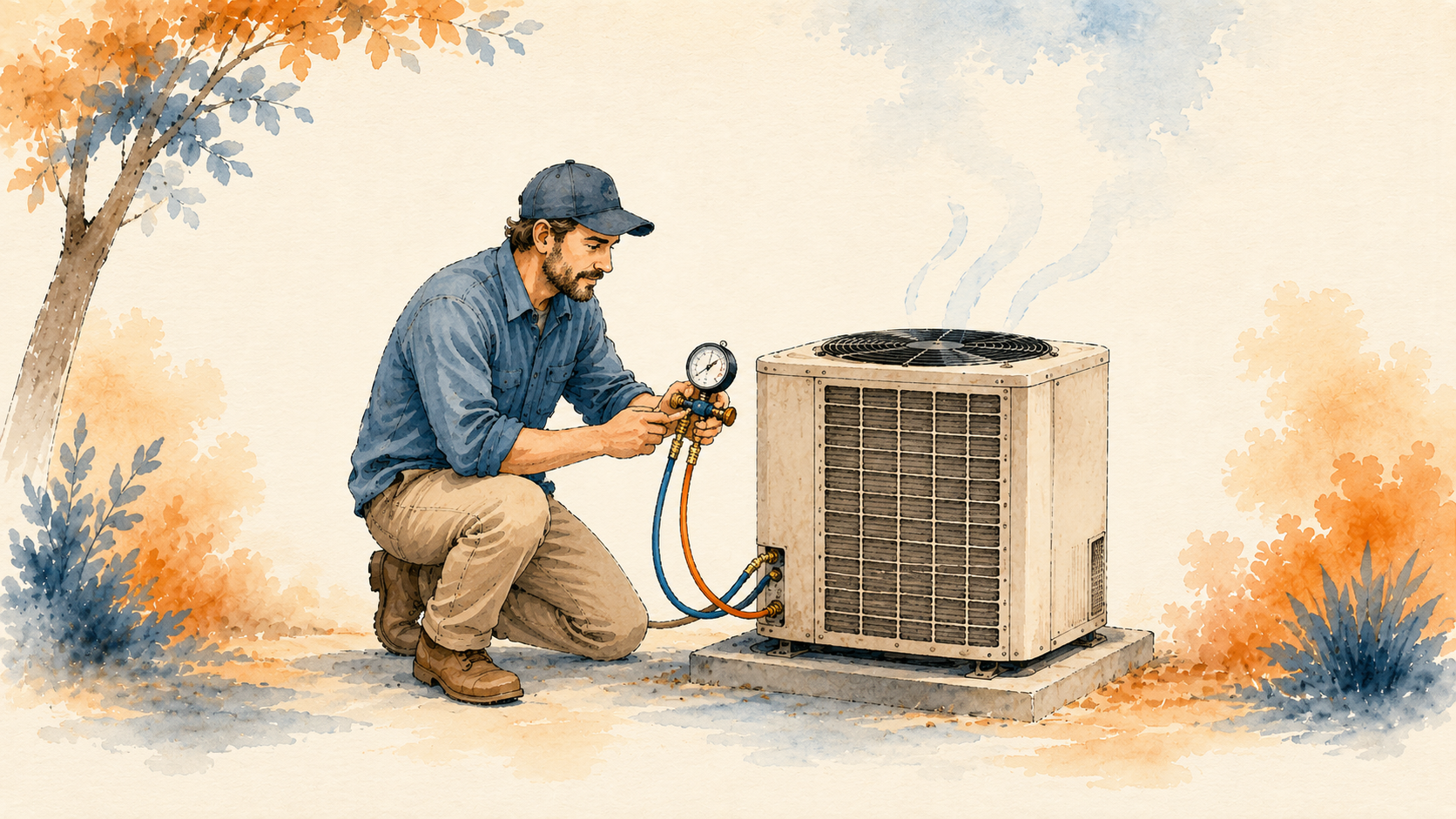
Here’s something that’s quietly reshaping the repair or replace decision in 2026. The older type of refrigerant that runs in most systems installed over the past fifteen years or so is being phased out. As of 2025, manufacturers stopped building new equipment that uses it, and the industry has moved to a newer refrigerant.
Your existing system can still be serviced, so there’s no need to panic. But the supply of that older refrigerant is tightening, and that’s pushing the price of a recharge up. If your aging AC has a refrigerant leak and needs a significant recharge, that repair costs more than it used to, and it’s likely to keep climbing.
That matters because refrigerant repairs are common on older units, and they’re exactly the kind of expense that tips an aging system toward replacement. A new AC uses the current refrigerant, so you sidestep the rising cost entirely. We keep our refrigerant figures general on purpose, since prices move, but the direction is clear and worth factoring in.
What a hot Sacramento Valley summer does to a tired AC
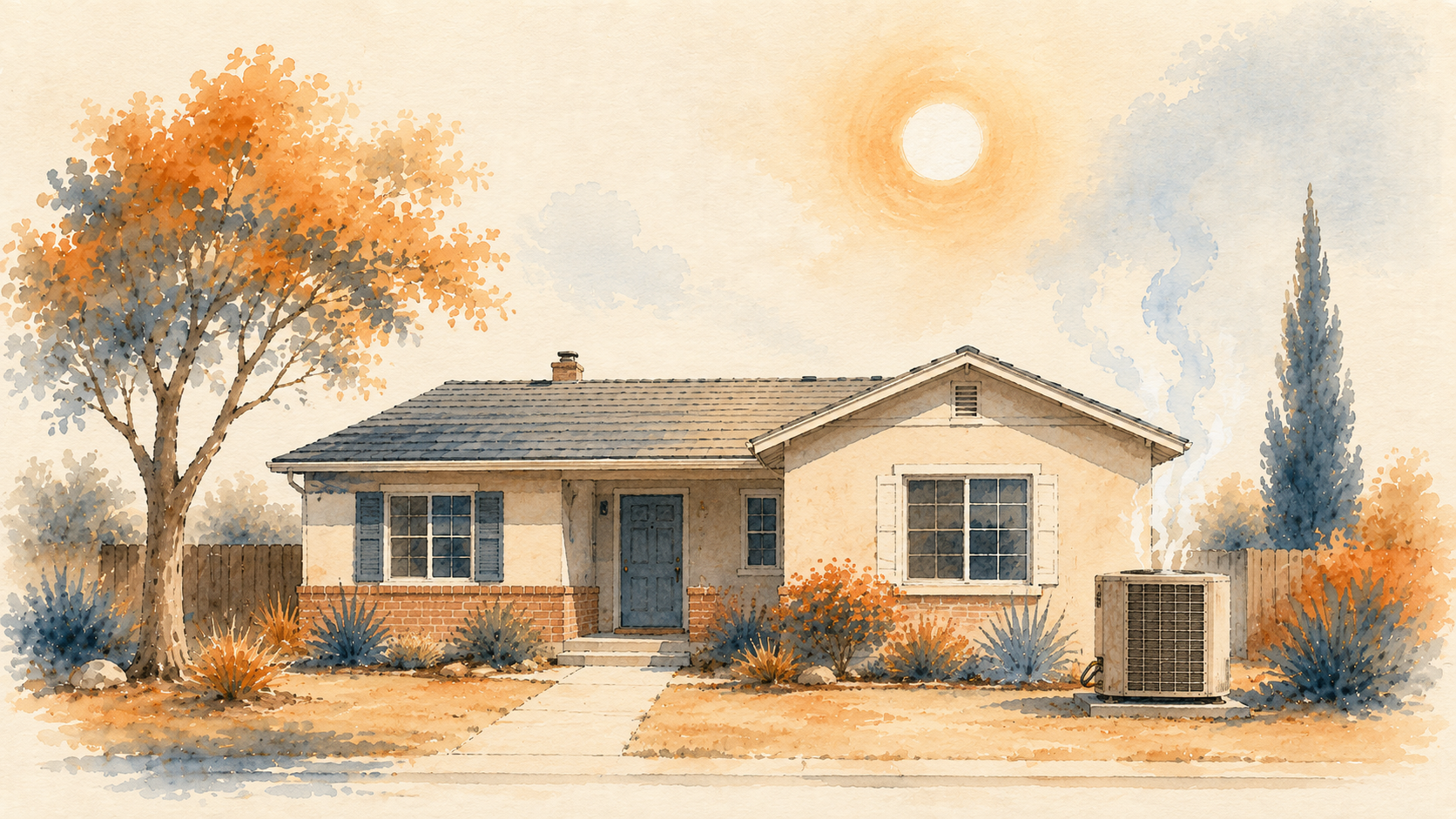
Elk Grove summers are hard on air conditioners. When we string together triple digit days in July and August, your AC runs long hours with almost no break, and that constant load is where old systems fail. A unit that limped through a mild spring can give out on the first real heat wave.
Here’s a real world example most Elk Grove homeowners will recognize. Your AC has been a little weak for a couple of summers. You’ve had it fixed once or twice, told yourself it’s fine, and then a 105 degree afternoon hits and the house won’t drop below the low 80s no matter what the thermostat says. That’s an aging system running out of margin, not a fluke.
The heat also raises the stakes on timing. A breakdown during a heat wave means a hot house, a stressful wait, and sometimes an emergency call at peak demand. If your unit is already old and shaky, planning a replacement on your own schedule beats getting forced into one on the worst possible day. Our AC repair team can keep a fixable system going, and our AC replacement team can help you plan ahead if yours is near the end.
Common mistakes homeowners make
The biggest mistake is chasing repairs on a unit that’s clearly done. Spending money on a fifth fix for a seventeen year old system usually costs more over two years than a replacement would, once you add up the repairs and the high summer bills.
Another common one is ignoring the energy bill. A newer, more efficient AC can cut cooling costs noticeably compared to a worn out unit that runs constantly. If your SMUD bills have crept up every summer while your habits stayed the same, your old AC is part of the reason.
People also wait too long on purpose, hoping to squeeze out one more year. That’s a fine plan right up until the unit dies in a heat wave and you’re choosing a new system under pressure. Deciding early, while your AC still runs, gives you time to compare options and avoid a rushed choice.
Finally, don’t skip regular AC maintenance on whatever system you keep. A tune up won’t save a unit that’s truly at the end, but it does stretch the life of a healthy one and catches small problems before they turn into the big repair that forces your hand.
Key takeaways
When you weigh whether to repair or replace ac equipment, keep it simple. Repair when the unit is under about 10 years old, the fix is small, and it’s been reliable. Replace when it’s past 15 years, faces a major repair like a compressor or coil, has broken down repeatedly, or needs a big refrigerant recharge that’s only getting pricier. Deciding before a heat wave forces the issue is always the calmer, cheaper path.
Frequently asked questions
How many years should an AC last in Elk Grove?
Most central systems last 15 to 20 years with good care, though our long, hot summers can shorten that. Once a unit passes 15 years, start planning for replacement even if it still runs.
Is it worth fixing a 10 year old AC?
Usually yes, if the repair is small. A ten year old unit still has useful life left, so a minor fix is money well spent. A major repair on a ten year old system is a closer call worth discussing with a pro.
Will a new AC really lower my energy bills?
A newer, efficient system typically uses less energy than a worn out one that runs nonstop, so many homeowners see lower cooling costs. The exact savings depend on your home, your old unit, and how you use it.
My AC still cools a little. Can I wait one more summer?
Maybe, but weigh the risk. An old unit that’s already struggling is most likely to fail during a heat wave, when help is in high demand. Planning ahead beats an emergency replacement on a 105 degree day.
Elk Grove AC Pros is a local HVAC information and lead request service. We are not a licensed contractor, and this article is general information, not professional HVAC advice. A licensed local pro should assess your specific system before you make a repair or replace decision. If you’d like a hand, request a free, no pressure quote and we’ll connect you with a local pro who can take a look.