
The first time your air conditioner gets replaced, the day feels a little strange. A crew shows up early, your hallway fills with drop cloths, and by mid morning a big piece of your house is sitting out by the side yard waiting to be hauled off.
Most Elk Grove homeowners go through this once, maybe twice, in all the years they own a home. So it’s normal to have no idea what’s supposed to happen, how long it should take, or what a careful crew even looks like.
That gap is worth closing. Once you know the rhythm of a new AC installation, you can tell the difference between a team doing thorough work and a team racing to their next appointment. Here’s how the whole thing usually goes in the Sacramento Valley, from the first visit to the moment cold air finally hits your vents.
It starts with a visit, not a price
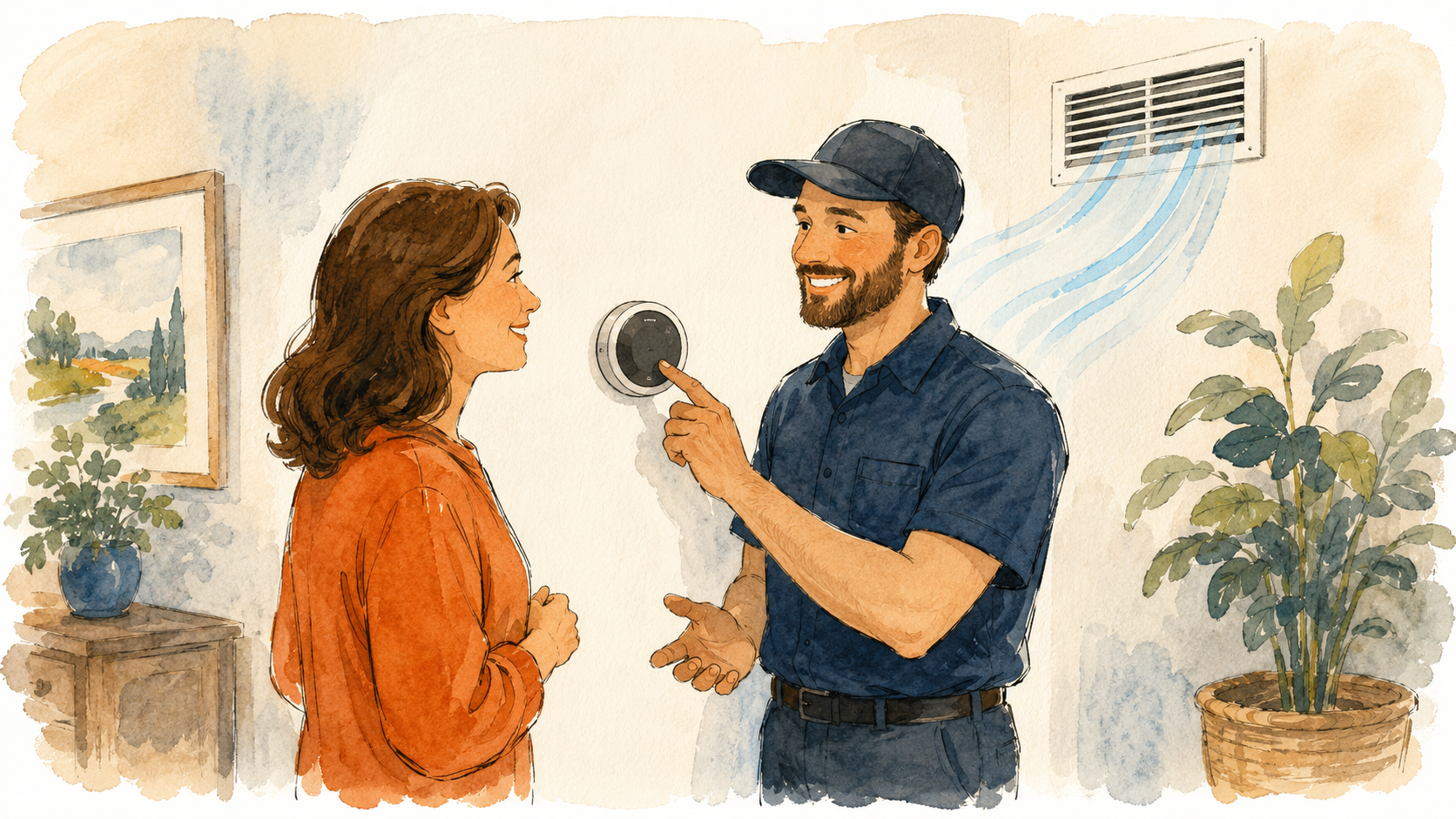
Any contractor who quotes you a complete system over the phone is guessing. A proper new AC installation begins with someone walking your house with a notepad.
Expect that visit to run from 45 minutes to well over an hour. A good estimator measures rooms, checks your windows, looks at attic insulation, pokes around your ductwork, opens your electrical panel, and stands where the outdoor unit will sit to see how much clearance it gets.
They should also ask questions that have nothing to do with equipment. Which rooms never get comfortable? Does the west side of the house bake after 4pm? Those answers shape the system more than the brand name on the box does.
If you’re still deciding whether replacement is even the right call, our guide on choosing between repair and replacement is a good place to start before you book any visits.
Sizing is the part nobody talks about
Here’s where a lot of Elk Grove installs quietly go wrong. Somebody reads the tonnage off the old label and orders the same size again. Or worse, orders one size bigger because the house has always felt warm.
The right way is a load calculation, often called a Manual J. It runs real numbers on your square footage, ceiling heights, window area and direction, insulation, and how leaky the house is. Two homes on the same Elk Grove street can genuinely need different sizes.
An oversized system is not a safety margin, it’s a problem. It blasts the air cold, hits the setpoint, and shuts off before it has run long enough to pull humidity out or move air evenly to the back bedrooms. You end up with a house that feels clammy and cold at once, plus a compressor that wears out early from all that stopping and starting.
California’s energy code has also tightened up around sizing documentation, and many permits now expect that paperwork upfront rather than after the fact. Requirements change and vary by jurisdiction, so ask your contractor to show you the calculation for your home specifically.
How long a new AC installation takes
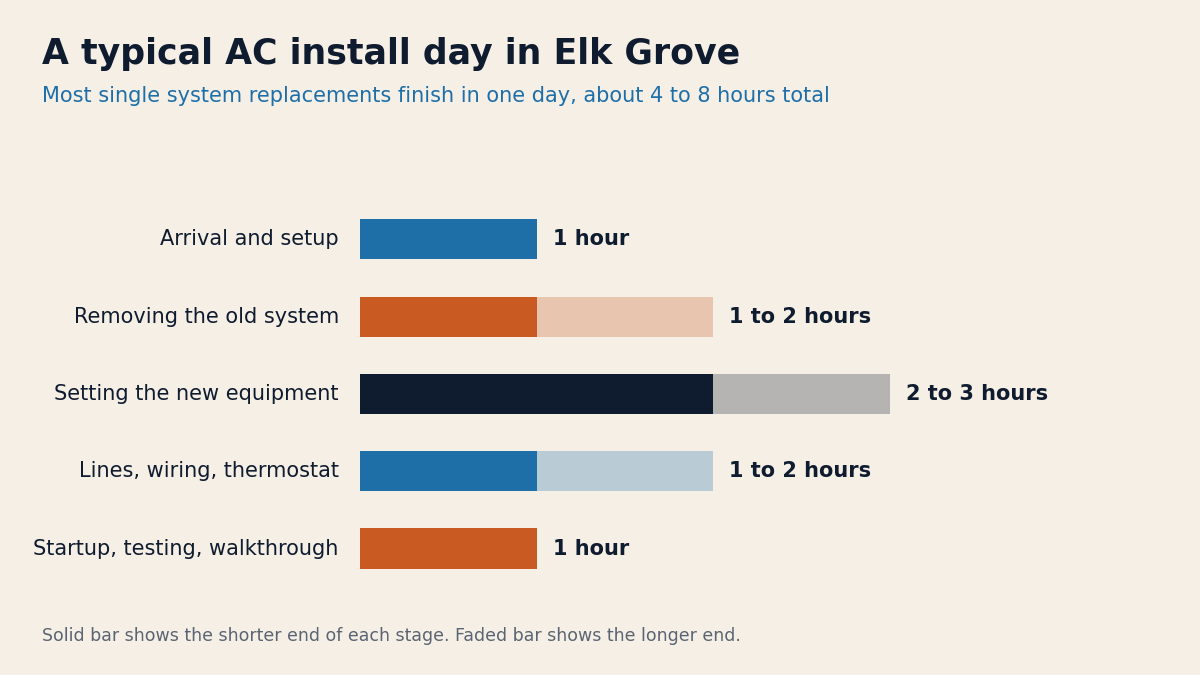
Most straightforward single system replacements in an Elk Grove home are done in one day, usually somewhere between 4 and 8 hours. Here’s roughly how those hours break down.
- Arrival and setup: about 1 hour
- Removing the old system: 1 to 2 hours
- Setting the new equipment: 2 to 3 hours
- Lines, wiring, and thermostat: 1 to 2 hours
- Startup, testing, and your walkthrough: about 1 hour
Jobs that also need duct repairs, a new pad, an electrical upgrade, or a swap in a tight attic can stretch into a second day. A crew that tells you upfront it’ll be two days is being honest, not slow.
Install day, step by step
1. Setup and shutdown
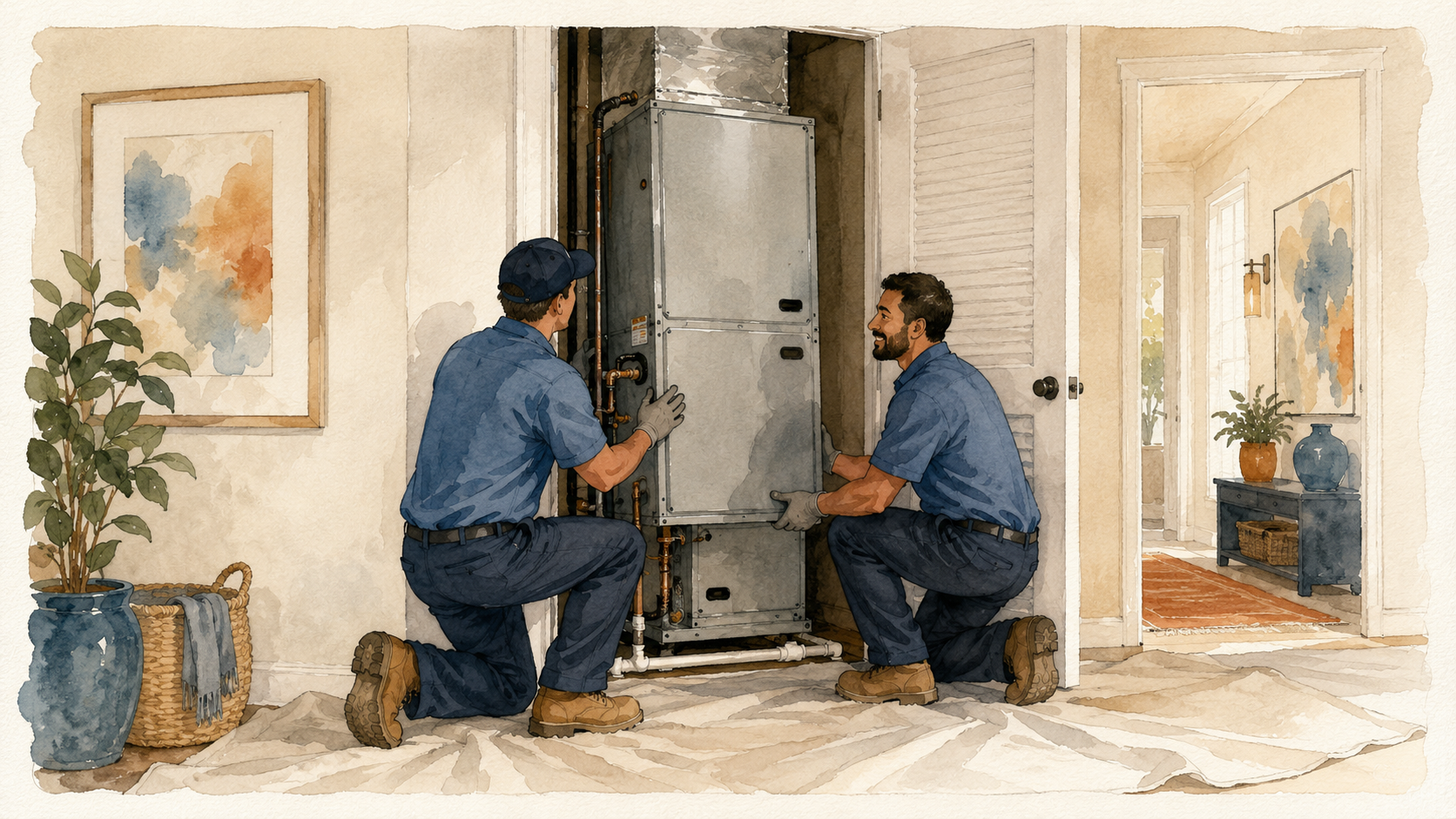
The crew arrives, walks the path from the door to the equipment, and lays drop cloths or runners over your floors. Then power gets cut at the breaker and at the outdoor disconnect, and the refrigerant is recovered from the old system into a tank.
Recovering refrigerant is required, not optional. If anyone suggests just cutting the lines and letting it go, that’s a serious red flag.
2. Out with the old
The old condenser comes off its pad, the indoor coil and air handler or furnace section come out, and the old lines and wiring get disconnected. This is the loudest, most disruptive stretch of the day.
3. Setting the new equipment
The new outdoor unit goes onto a level pad, the indoor equipment gets set and sealed in place, and the crew builds any transition work needed to fit new equipment into an older cabinet space. Sloppy sheet metal work here is a common cause of a system that never quite performs.
4. Lines, wiring, and the thermostat
Refrigerant lines get run and brazed, the condensate drain is connected and sloped, electrical is landed, and the new thermostat goes on the wall. Then the system gets pulled into a deep vacuum to remove moisture and air before refrigerant goes in. Skipping or rushing the vacuum is a quiet way to shorten a brand new system’s life.
5. Startup, testing, and the walkthrough
The system fires up and the technician checks refrigerant charge, measures the temperature drop across the coil, verifies airflow, and confirms the thermostat is talking to the equipment. Then they should show you exactly where the filter lives, what size it is, and how often to change it.
Permits and paperwork are on your side
A permitted job means an inspector eventually looks at the work. That’s a free second opinion, and it’s the main reason unpermitted installs are such a gamble.
Before the crew leaves, you should have the model and serial numbers of both units, a copy of the permit, and the warranty terms in writing, including what the labor warranty covers and for how long. Many manufacturers require you to register the equipment within a few months of installation, or the long warranty term drops back to a much shorter default. Ask who is handling that registration, you or them.
You can look up efficiency information for specific models on the ENERGY STAR site to check what you were quoted against what got installed.
How to get your home ready
A little prep makes the day go faster and protects your stuff.
- Clear a wide path from the front door to the indoor equipment, and empty the closet or hallway around it.
- Trim back shrubs and move planters so there’s several feet of open space around the outdoor unit.
- Plan for the AC to be off for most of the day. In a July heat wave, that matters.
- Make a plan for pets and small kids, since doors stay open and tools stay out.
- Take down anything fragile hanging on walls near the work area.
Picture a family off Elk Grove Boulevard replacing a system in mid August. They booked a Tuesday install, sent the dog to a friend’s place, and spent the afternoon at the library with the kids. By dinner the house was cooling again and nobody sat through eight hours in a warm living room.
Common mistakes to avoid
These are the ones that cost Elk Grove homeowners the most, and they’re all avoidable.
Choosing on price alone
The cheapest bid often skips the load calculation, reuses questionable ductwork, or leaves out the permit. You pay for that later in energy bills and callbacks.
Ignoring the ducts
Putting an efficient new system on leaky attic ducts is like putting new shoes on a broken ankle. If your ducts are old and separating, ask about sealing or repair while everything is open.
Not asking who actually does the work
Some companies sell the job and subcontract the install. That isn’t automatically bad, but you deserve to know who’s standing in your hallway and who honors the labor warranty.
Paying in full before startup
A deposit is normal. Paying the whole balance before the system runs and passes inspection is not.
Letting them put the outdoor unit anywhere convenient
A condenser crammed against a fence, or baking in full west sun with no shade and no clearance, works harder every single summer afternoon.

What a good handoff looks like
When the crew leaves, you should have a system that’s quiet, a thermostat you understand, and floors as clean as they found them. You should know your filter size, the name of a real person to call, and the date your first maintenance visit should happen.
Speaking of which, get on a service schedule right away. New systems still need attention, and our page on AC maintenance covers what a real tune up should include in a valley climate like ours.
Key takeaways
- A real quote starts with someone measuring your house, not a phone call.
- Sizing comes from a load calculation, and bigger is not better.
- Most installs run 4 to 8 hours in a single day, longer if ducts or electrical need work.
- Refrigerant recovery, a deep vacuum, and a verified charge separate careful work from rushed work.
- Get the permit, the model and serial numbers, and the warranty terms in writing.
Questions Elk Grove homeowners ask
Can I stay home during the install?
Yes, and it helps to be reachable for questions. Just expect noise, open doors, and no cooling for most of the day. If it’s over 100 degrees out, plan somewhere cooler for the afternoon.
Do I need to replace the ductwork too?
Not always. Ducts that are intact, sealed, and correctly sized can absolutely serve a new system. Ducts that are crushed, disconnected, or badly undersized will hold a new system back no matter how efficient it is.
What time of year is best for a new AC installation?
Spring and fall are the calm seasons, so scheduling is easier and crews aren’t stretched thin. That said, plenty of Sacramento area systems quit in July, and a good company will still get you handled quickly.
How soon can I run the new system?
Usually the same day. The technician starts it before leaving and confirms it’s cooling properly, so you’re not waiting on anything.
Ready to talk it through?
Elk Grove AC Pros is a local HVAC information and lead request service. We’re not a licensed contractor, and this article is general information rather than professional HVAC advice. Codes, permit rules, equipment options, and pricing all vary, so a licensed local pro should assess your specific home and system before you make any decisions.
If a new AC installation is on your list this year, we can connect you with local pros who’ll come out and take a real look. Learn more about the process on our AC installation and AC replacement pages, or request a free, no pressure quote and see what makes sense for your home.