
It’s a Sunday afternoon in August, your patio thermometer says 104, and you walk out to check on the air conditioner. You hold a hand near the top of the outdoor unit and a blast of hot air hits your palm. Your stomach drops a little. That can’t be right, can it?
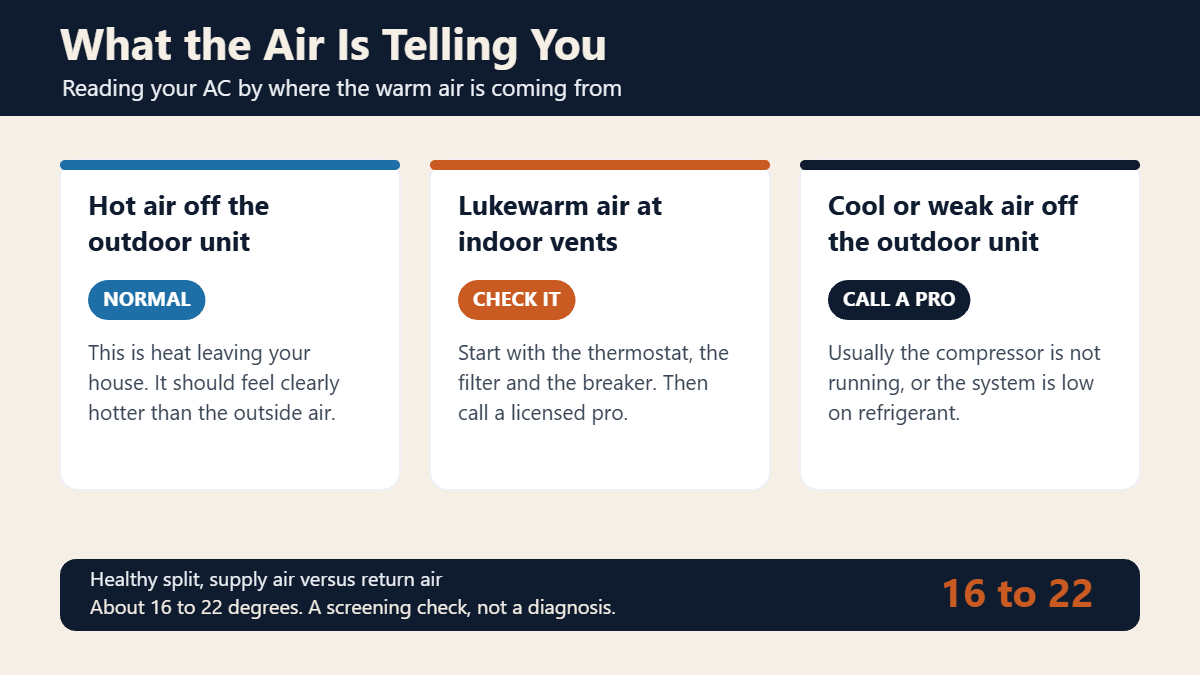
Here’s the part nobody explains to homeowners: that hot air is the system doing exactly what it was built to do. The outdoor unit was never supposed to blow cold. It blows hot because it’s dumping the heat it just pulled out of your living room.
So people looking for answers about an AC blowing warm air are usually standing in one of two very different situations that feel similar. One is normal. The other needs a technician. Telling them apart saves you a service call, or gets you one before a small problem turns expensive.
Why Your Outdoor Unit Blows Hot Air on Purpose
Your air conditioner doesn’t manufacture cold air. It moves heat. Refrigerant circulates through the coil inside your house, soaks up heat from the air passing over it, then carries that heat out to the unit beside your fence.
Out there, the condenser coil releases it and the big fan on top pushes it straight up and away. The air leaving your outdoor unit should feel clearly hotter than the outside air, which during a Sacramento Valley heat wave can feel downright unpleasant.
That’s good news. It means refrigerant is moving, the compressor is doing its job, and heat is leaving your house instead of sitting in it. A neighbor whose outdoor unit “runs cool” doesn’t have a better system. They have a problem.

When AC Blowing Warm Air Really Is a Problem
The warning sign isn’t hot air outside. It’s lukewarm air at the registers inside.
Walk to a supply vent with the system running and hold your hand a few inches away. If the air feels like room temperature, or only a touch cooler, that’s the version worth worrying about.
Technicians use a quick check here. Compare the air coming out of a supply vent to the air pulled into your return vent. A healthy system usually shows a gap of roughly 16 to 22 degrees, though that shifts with humidity, ductwork, and equipment type, so treat it as a screening test rather than a verdict. A small or missing gap while the outdoor unit clearly runs means something in the heat transfer chain has broken down.

Why the Air at Your Vents Went Warm
1. The thermostat is fighting you
It sounds too simple, but it’s the first thing any honest tech checks. A thermostat bumped to heat, or running a schedule you forgot about, will blow room temperature air all day.
Watch the fan setting too. On auto, the blower only runs when the system is cooling. Left on, it runs constantly, so between cycles you feel uncooled air at your vents.
2. The filter is choking the system
A filter packed with dust starves the indoor coil of airflow. Less air across the coil means less heat picked up, weaker cooling, and eventually a coil cold enough to ice over and stop cooling altogether.
Most Elk Grove homes do fine changing filters somewhere in the 30 to 90 day range, closer to the short end with pets, allergies, or a summer of valley dust.
3. Refrigerant is low because something is leaking
Refrigerant isn’t fuel. It circulates in a sealed loop and doesn’t get used up, so a system that’s low has a leak. Less refrigerant means less heat carried out, which shows up as weak cooling long before it becomes no cooling. Topping it off without finding the leak is money poured into the air.
4. The condenser coil is dirty or crowded
That outdoor coil can only shed heat if air moves freely through it, and grass clippings, valley dust, and a hedge that got away from you all block it. The Department of Energy suggests trimming foliage back at least two feet so the unit can breathe, and their maintenance guidance is worth a read.
5. A capacitor or contactor has failed
These small electrical parts tell the compressor and fan motor to start, and valley summers are brutal on them. A bad capacitor usually shows up as a unit that hums but won’t start, or a fan that spins while the compressor sits out. Our guide to AC capacitor failure covers the signs.
6. The breaker tripped
The indoor blower and the outdoor unit often sit on separate circuits. When the outdoor breaker trips, the indoor fan keeps blowing happily while nothing gets cooled. Reset a tripped breaker once, and if it trips again, stop and call someone, because a breaker that keeps tripping is protecting you from something.
The Other Red Flag: Cool or Weak Air Outside
Now flip it around. The fan is spinning, but the air off the top feels lukewarm, about the same as the afternoon air.
That points one of two ways. Either the compressor isn’t running even though the fan is, or the system is low enough on refrigerant that there’s almost no heat left to reject. Both are real repairs, not settings you can change.
Same goes if the fan isn’t turning at all while the unit hums. Switch the thermostat off if you find a humming unit with a motionless fan, because a compressor running against a coil that can’t shed heat is how a moderate repair becomes a replacement. Our post on an AC fan not spinning walks through what to check. Grinding noises or repeated breaker trips alongside weak cooling can point at the compressor itself, covered in our guide to AC compressor repair in Elk Grove.

What You Can Safely Check Yourself
- Confirm the thermostat is set to cool, the target is below room temperature, and the fan is on auto.
- Pull the filter and hold it up to a light. If you can’t see light through it, replace it.
- Check the panel for a tripped outdoor unit breaker, and reset it exactly once.
- Clear leaves, clippings, and overgrown shrubs back from the outdoor unit on all sides.
- Make sure supply registers are open and nothing is parked in front of the return vent.
That’s the whole homeowner list. Anything past it means live voltage, regulated refrigerant, or parts that hold a charge after the power is off. Leave those to a licensed pro.
What a Real Diagnosis Involves
A good technician isn’t guessing from how the air feels. They’re measuring refrigerant pressures against the outdoor temperature, testing the capacitor against its stamped rating, inspecting the contactor for pitting, reading amp draw, and taking the real temperature split at your registers.
Just as important, they find the reason. Low refrigerant means locating the leak. A burned contactor means learning what cooked it. A repair that doesn’t answer the why is a countdown to the next service call.
Common Mistakes We See Around Elk Grove
Panicking over hot air outside. Plenty of homeowners call for service because the outdoor unit feels hot, when that’s the one part behaving perfectly. Check your indoor vents first.
Cranking the thermostat down to 62. Your system cools at one speed. Setting it lower doesn’t make cold air arrive faster, it just runs the equipment longer on the hottest day of the year.
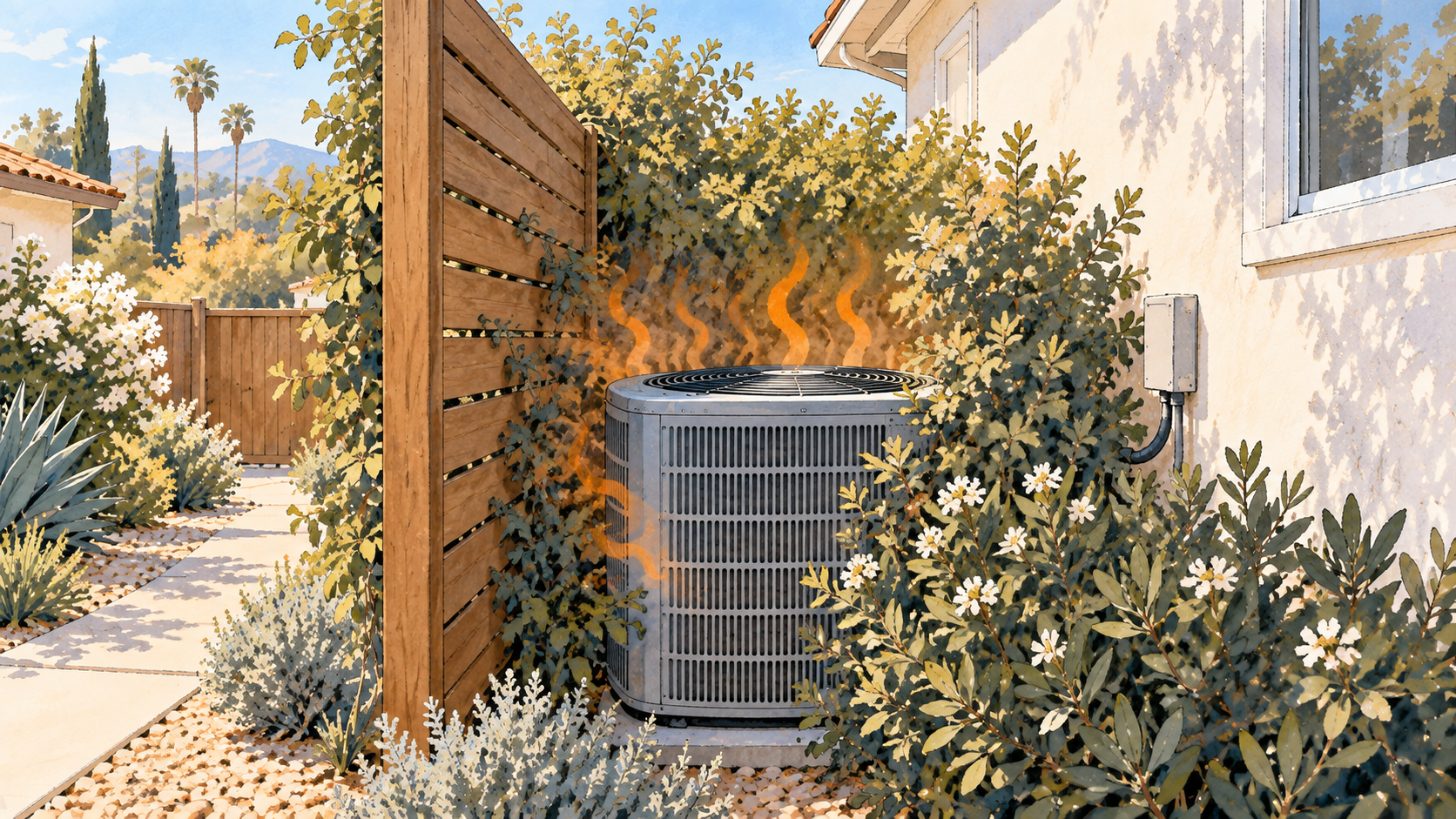
Letting the condenser get boxed in. One family off Sheldon Road had lukewarm vents for two weeks and a climbing electric bill. Their unit sat inside a decorative screen enclosure with about eight inches of clearance on three sides. It couldn’t dump heat, so it just kept running.
Waiting out a heat wave. A system limping along in triple digit heat rarely recovers on its own. It usually quits on the afternoon when every company in the greater Sacramento area is booked solid.
What to Do Right Now
Start inside, not outside. Hold a hand in front of a supply vent and decide whether the air is truly cold or just moving. If it’s cold, your outdoor unit is fine.
If it’s lukewarm, run the five safe checks above. If those don’t fix it, or the outdoor unit hums with a still fan, shut the system off at the thermostat and get a licensed pro out.
When the house is climbing past comfortable and you’ve got kids, seniors, or pets at home, that’s an emergency AC repair situation, not a Monday morning problem. Otherwise a standard AC repair visit is the right call, and a yearly AC maintenance appointment is what keeps you from making this call at all.
Key Takeaways
- Hot air off your outdoor unit is normal. That’s heat leaving your house.
- The real warning sign is lukewarm air at your indoor registers while the system runs.
- Healthy systems usually deliver air about 16 to 22 degrees cooler than the return air, as a screening check only.
- Thermostat settings, a clogged filter, and a tripped breaker are the three causes you can rule out yourself.
- Lukewarm air off the outdoor unit points at the compressor or a refrigerant leak.
- A humming outdoor unit with a motionless fan should be shut off at the thermostat right away.
Frequently Asked Questions
Should the air from my outdoor AC unit feel hot?
Yes. On a hot Elk Grove afternoon it can feel much hotter than the surrounding air, and that’s the system rejecting heat the way it should. Cool or weak air off the top is what should worry you.
Why is my AC blowing warm air inside while the outdoor unit runs?
A spinning outdoor fan doesn’t mean the compressor is running. Low refrigerant, a failed capacitor, a dirty coil, or a restricted filter all leave you with air moving through the house that never got cooled.
Can I add refrigerant myself?
No. Refrigerant handling is regulated, the charge has to be measured rather than guessed, and adding more without repairing the leak just delays the same failure. It can also damage the compressor, the most expensive part in the system.
Get a Straight Answer From a Local Pro
Elk Grove AC Pros is a local HVAC information and lead request service. We’re not a licensed contractor, and this article is general information rather than professional HVAC advice. Systems and homes vary, so a licensed local pro should assess your specific equipment before you spend money on it.
If you’re dealing with an AC blowing warm air at the registers and you’d rather have someone look than keep guessing, we’ll match you with a licensed local technician serving Elk Grove and the greater Sacramento area. Request a free, no pressure quote and get a real answer about what your system needs.