If you opened your July SMUD bill and did a double take, you’re not imagining it. Summer bills in Elk Grove and across the greater Sacramento area almost always jump the moment real heat arrives, and July is usually the worst of it. The reason why SMUD bills spike in July comes down to two things happening at the same time: SMUD charges more for power in the summer, and your air conditioner is working harder than at any other point in the year. Put those together and the number at the bottom of the bill climbs fast.
Here’s the good news. Once you understand what’s driving that summer jump, you can do a lot to soften it. Let’s walk through exactly what’s going on and what actually helps.
Why SMUD bills spike in July: two things hit at once
Your July bill is really the collision of a higher price and a higher amount of power used. On the price side, SMUD runs a summer season, roughly June through September, when electricity simply costs more per unit than it does the rest of the year. On the usage side, a Sacramento Valley July means your AC may run for most of the day and well into the evening just to hold the house at a comfortable temperature.
So even if your habits haven’t changed at all, the same cooling you did in May costs more in July. That surprises a lot of homeowners, and it’s the single biggest reason the bill feels out of line with what you remember.
How SMUD’s summer rates actually work
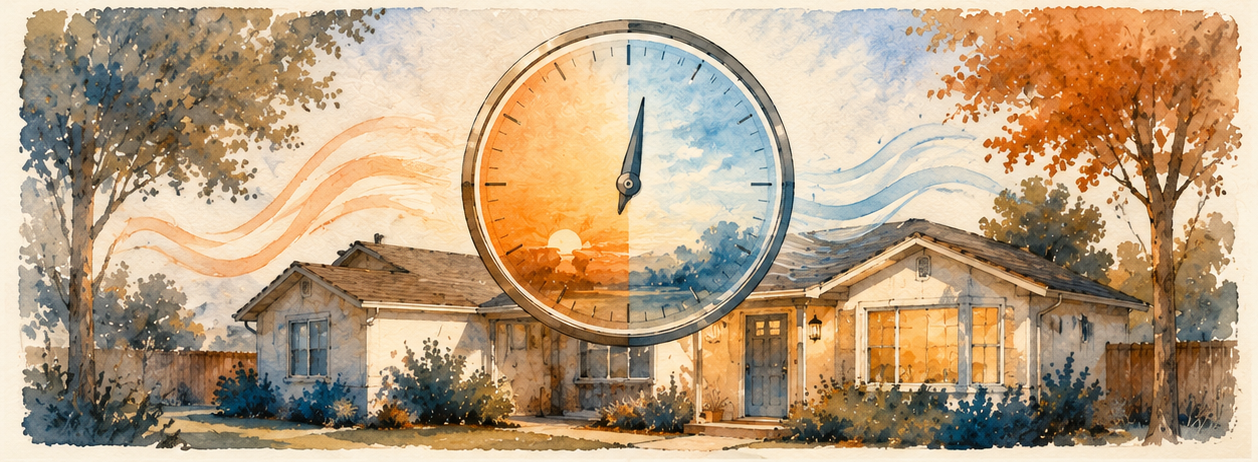
Most Elk Grove homes are on a time of day rate, which means the price of power changes depending on when you use it. Weekday evenings are the expensive window. SMUD sets its peak pricing on weekdays from 5 p.m. to 8 p.m., and during the summer that peak rate is the priciest power you’ll buy all year.
Why that window? Because that’s when the whole region gets home, cranks the AC, cooks dinner, and runs everything at once. Demand across the grid is highest right then, so the price is highest right then too. Overnight and midday power costs a lot less by comparison.
The exact rates change, so check your current pricing on SMUD’s site before you make big decisions. But the shape holds every summer: weekday 5 p.m. to 8 p.m. is the costly stretch, and July lands in the middle of the pricey summer season. That combination is a big part of why SMUD bills spike in July.

Why your AC is the biggest driver
In a Sacramento Valley summer, your air conditioner is almost always the largest single user of electricity in your home. Nothing else in the house comes close. When afternoons sit above 100 degrees for days on end, your system runs long cycles just to keep up, and every one of those cycles pulls power.
Two homes on the same street can get very different July bills, and the AC is usually the reason. An older or poorly maintained system has to run longer and harder to reach the same temperature a healthy system reaches quickly. That extra runtime is extra money, every single day of the heat.
A few things quietly make one home’s cooling cost more than the neighbor’s:
- A dirty filter or dirty coils, which choke airflow and force the system to run longer
- Low refrigerant from a slow leak, so the AC cools weakly and never quite catches up
- Leaky or poorly insulated ducts that dump cooled air into the attic instead of your rooms
- An aging system that has simply lost efficiency over the years
- A thermostat set low all afternoon, right through the most expensive hours
How to bring your July bill back down
You can’t change SMUD’s summer pricing, but you have real control over how much power your AC burns during the priciest hours. A handful of small moves add up.
Precool before the 5 p.m. peak
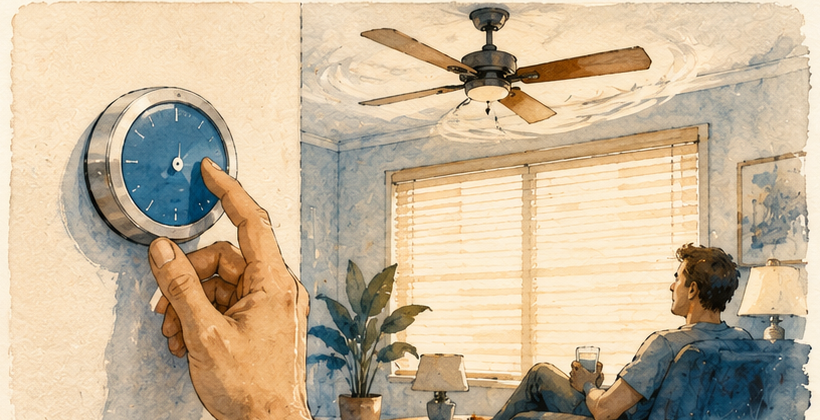
This is the biggest lever most people never pull. Cool your home down a little extra in the late afternoon, before 5 p.m., then ease the thermostat up a few degrees during the 5 p.m. to 8 p.m. window. Your house coasts on the cool you already banked, and you shift runtime out of the most expensive stretch of the day. Shifting even part of your cooling out of that evening window is the fastest way to shrink a summer bill.
Give the thermostat a little room
The U.S. Department of Energy suggests setting your thermostat around 78 degrees when you’re home and comfortable, and higher when you’re out. Every degree you nudge up in summer trims the load, because your system runs fewer and shorter cycles. You don’t have to suffer to save. A degree or two, plus a ceiling fan, keeps most rooms comfortable while the AC works less.
Block the heat before it gets in
Close blinds and curtains on the sunny side of the house during the afternoon. Run ceiling fans so you feel cooler at a slightly higher setting. Cook outside or use the microwave on the hottest evenings instead of heating up the kitchen. None of this is dramatic, but together it means your AC isn’t fighting a losing battle.
Shift the other big users off peak
Your AC isn’t the only thing running in that 5 p.m. to 8 p.m. window. Run the dishwasher, the laundry, and any car charging later at night or early in the morning when power is cheaper. It won’t match the savings from your AC, but it’s free money left on the table if you don’t.
When a high bill means your AC needs attention
Sometimes a July spike is just summer. But sometimes it’s your system telling you something. If your bill jumped far more than the weather alone explains, or the house never quite gets comfortable no matter how long the AC runs, the equipment itself may be the problem.
A system that’s low on refrigerant, clogged with dust, or simply worn out will use more power to deliver less cooling. That’s where a professional tune up pays for itself. Regular AC maintenance keeps filters clean, airflow strong, and refrigerant where it should be, so your system runs the short efficient cycles it was designed for instead of grinding all afternoon.
If your AC is well past a decade old and your bills climb higher every summer while the cooling gets weaker, maintenance can only do so much. At that point it’s worth pricing out an AC replacement. A newer, more efficient system can cut the amount of power your home needs on those brutal July afternoons, which is exactly when SMUD charges the most.
Common mistakes that make it worse
A few habits quietly push July bills higher, and they’re easy to fix once you know them.
The first is cranking the thermostat way down when you get home hot, thinking it cools the house faster. It doesn’t. Your AC cools at the same rate no matter what number you pick, so all you’ve done is guarantee it runs deep into the expensive evening window.
The second is ignoring the filter. A filter left in too long chokes your whole system, and a choked system runs longer for less cooling. Checking it once a month in summer is one of the cheapest things you can do.
The third is waiting until the AC fully quits before calling anyone. A system that’s struggling is usually costing you extra on every bill long before it dies. Catching it early saves both the emergency and the wasted power in between.
Key takeaways
- SMUD bills spike in July because summer pricing is higher and your AC is running its hardest at the same time.
- Weekday evenings from 5 p.m. to 8 p.m. are the most expensive hours, so cooling done then costs the most.
- Your air conditioner is the biggest power user in the house during a Sacramento Valley summer.
- Precooling before 5 p.m., easing up the thermostat, and blocking afternoon heat are the fastest ways to lower the bill.
- A bill that spikes more than the weather explains often points to a system that needs maintenance or replacement.
Frequently asked questions
Is it cheaper to leave my AC on all day or turn it off?
For most Elk Grove homes, setting the thermostat higher while you’re out beats turning the system fully off and letting the house bake, then blasting it cold later. Precooling before the 5 p.m. peak and coasting through the evening usually wins on a time of day rate.
Why is my bill higher than my neighbor’s when we have similar homes?
Usually it’s the AC. An older, dirty, or low refrigerant system runs longer to reach the same temperature, and that extra runtime shows up as extra dollars. A maintenance visit often finds the gap.
Does closing vents in unused rooms save money?
Not really, and it can strain your system. Central AC is designed to move a set amount of air, and closing too many vents raises pressure in the ducts and can hurt efficiency. You’re better off with a properly sized and maintained system.
Elk Grove AC Pros is a local HVAC information and lead request service. We are not a licensed contractor, and this article is general information, not professional HVAC advice. Rates, rebates, and any figures mentioned change over time, so confirm current details with SMUD, and have a licensed local pro assess your specific system. If your July bill has you worried about your AC, request a free, no pressure quote and we’ll connect you with a local pro who can take a look.