
If your AC is running longer and cooling less, the problem might be hiding in plain sight on the coils. AC coil cleaning is one of the most overlooked pieces of home cooling, and here in Elk Grove, where your system runs hard through a long dusty summer, dirty coils quietly cost you comfort and money all season. Here’s what your coils do, why keeping them clean matters so much, how often to clean them, and when it’s a job for a pro.
What are AC coils, and what do they do?
Your air conditioner has two sets of coils, and together they’re how your home actually gets cool. The evaporator coil sits inside, near the air handler, and absorbs heat from the air in your house. The condenser coil sits in the outdoor unit and releases that heat outside.
Both coils are made of metal tubing wrapped with thin fins, packed close together to move heat quickly. That tight spacing is great for cooling, but it also makes the coils a magnet for dust, dirt, pollen, and grime. As that layer builds up, it acts like a blanket, and the coils lose their ability to move heat.
Why AC coil cleaning matters more than people think
A dirty coil doesn’t stop your AC, it just makes it work much harder to do the same job. That has real costs.
Efficiency is the big one. When coils are coated in grime, the system has to run longer to hit your setpoint, and studies of AC maintenance have found that fouled coils can push energy use up noticeably, in some cases by a large margin. On a hot Elk Grove afternoon, that shows up as a house that never quite gets comfortable and a SMUD bill that creeps higher than it should.
Then there’s wear. A system straining against dirty coils runs hotter and longer, which stresses the compressor and shortens the life of your equipment. Clean coils are one of the cheapest ways to protect the most expensive part of your AC. Dirty coils also trap moisture and can affect the air quality in your home, and a badly fouled evaporator coil can even freeze up and leave you with no cooling at all.
Signs your coils need cleaning
Your AC usually hints that the coils are overdue. Watch for these.
- The air feels cooler than the room but never quite gets the house comfortable.
- The system runs longer and longer cycles, or seems to run almost nonstop.
- Your energy bill climbs without a matching jump in the weather.
- The outdoor unit looks dirty, with fins clogged by dust, grass, or leaves.
- You see ice on the copper lines or the indoor coil, a classic sign of a coil that can’t breathe.
- Airflow at the vents feels weak.
Any of these is worth a look, and a few of them together during peak heat mean it’s time to act.
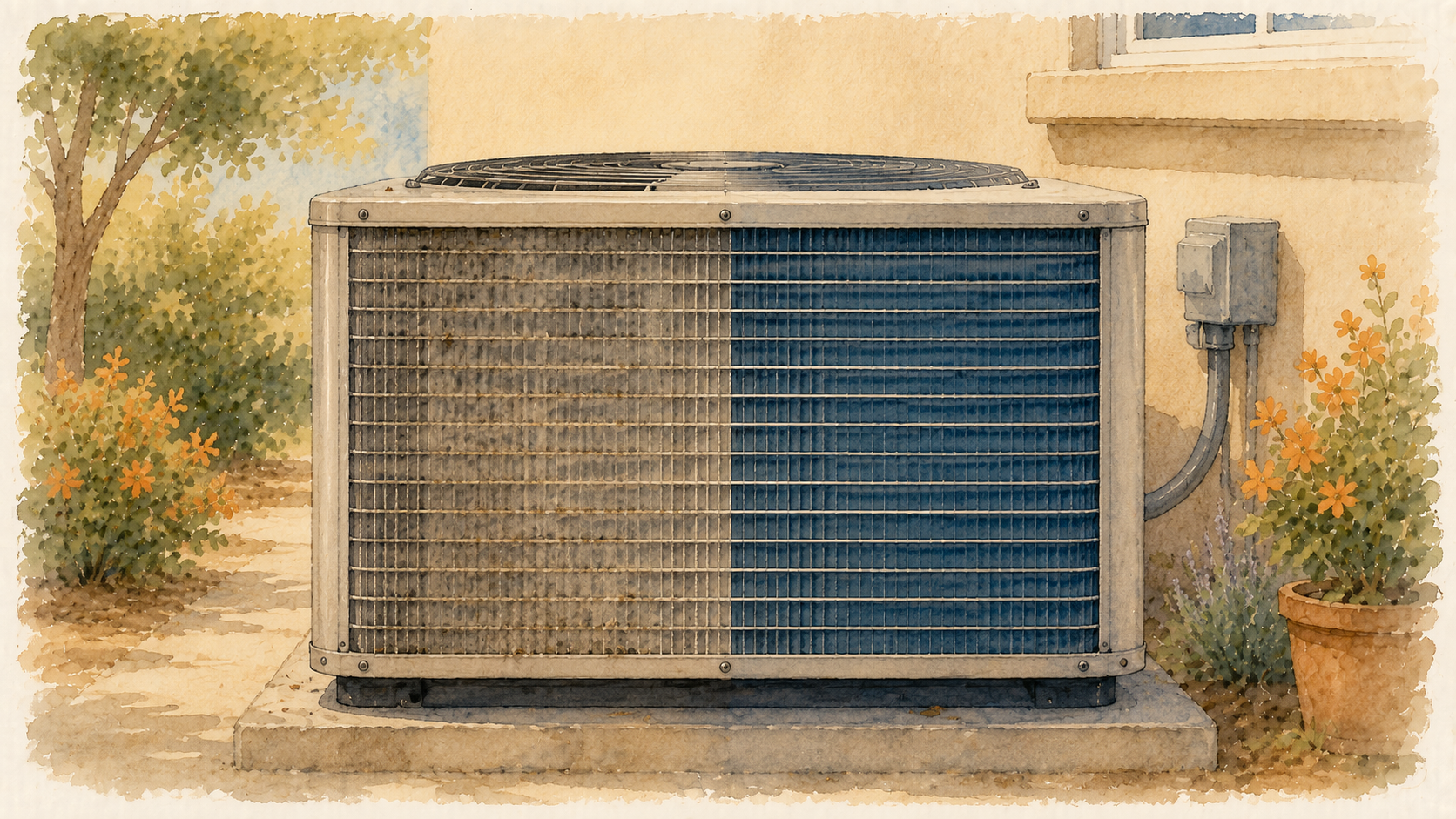
How often should you clean AC coils in Elk Grove?
As a baseline, plan on having your coils inspected and cleaned at least once a year, ideally in spring before the cooling season really gets going. That yearly service catches buildup before summer puts your system under full load.
Here in the Sacramento Valley, though, conditions can call for more. Our long, dry, dusty summers coat outdoor units faster than a mild climate would, and if you’re near open fields, heavy landscaping, or a lot of foot traffic, the condenser coil can need attention more than once a season. If you have pets or allergies, staying on top of coil and filter cleaning helps your indoor air too. A quick visual check of the outdoor unit every month or so during summer tells you a lot.
Coil cleaning is a core part of a seasonal tune up, not a separate chore you have to remember. Our AC maintenance service folds it in with a refrigerant check, filter change, and a full inspection so everything gets handled at once.
Condenser coil vs evaporator coil: two different jobs
It helps to know which coil is which, because they get dirty in different ways and call for different care.
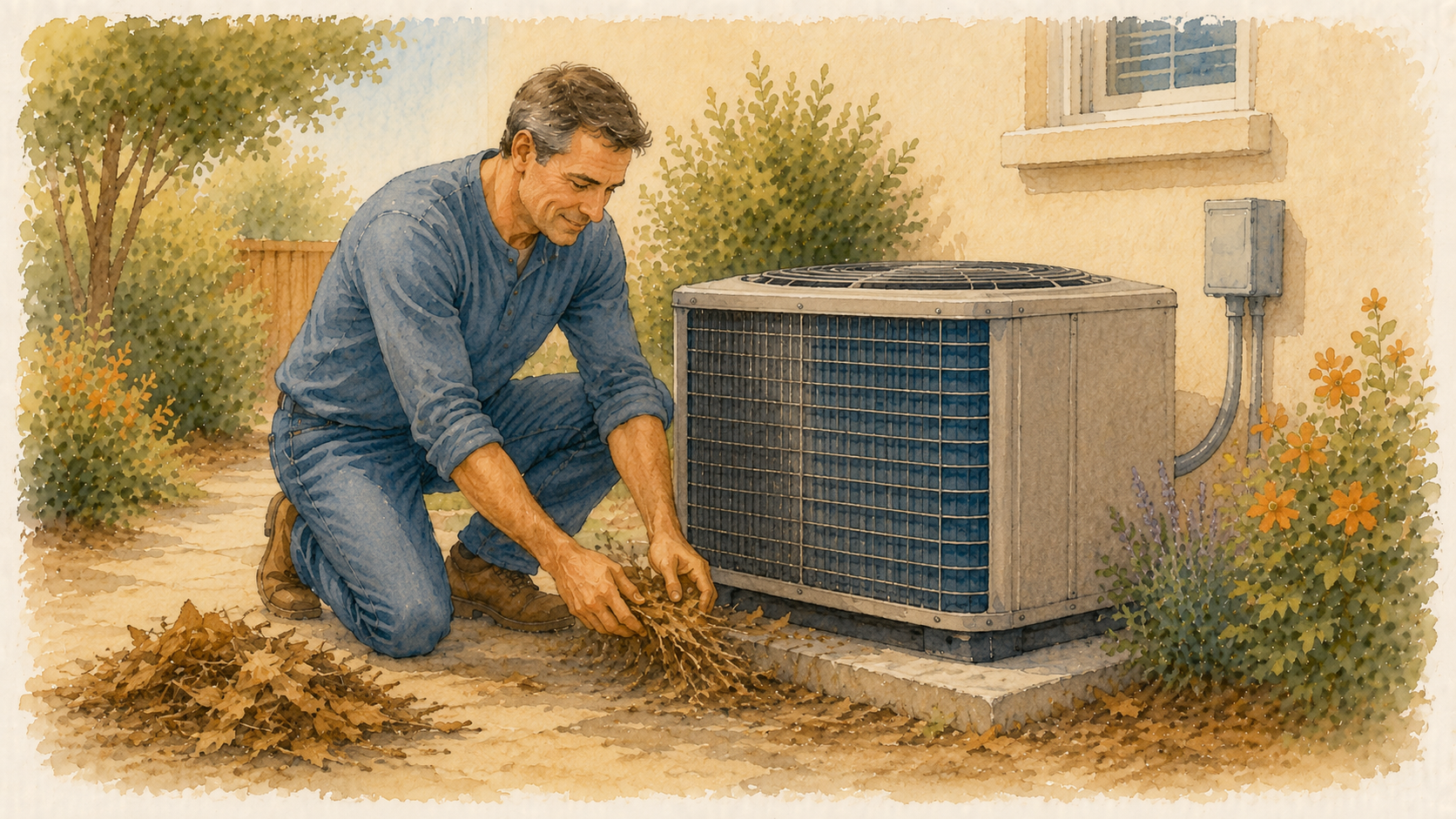
The condenser coil, outside, faces the weather. It collects leaves, grass clippings, cottonwood fluff, dust, and dryer lint from nearby vents. Because it’s out in the open, it’s the coil most homeowners can help keep clean.
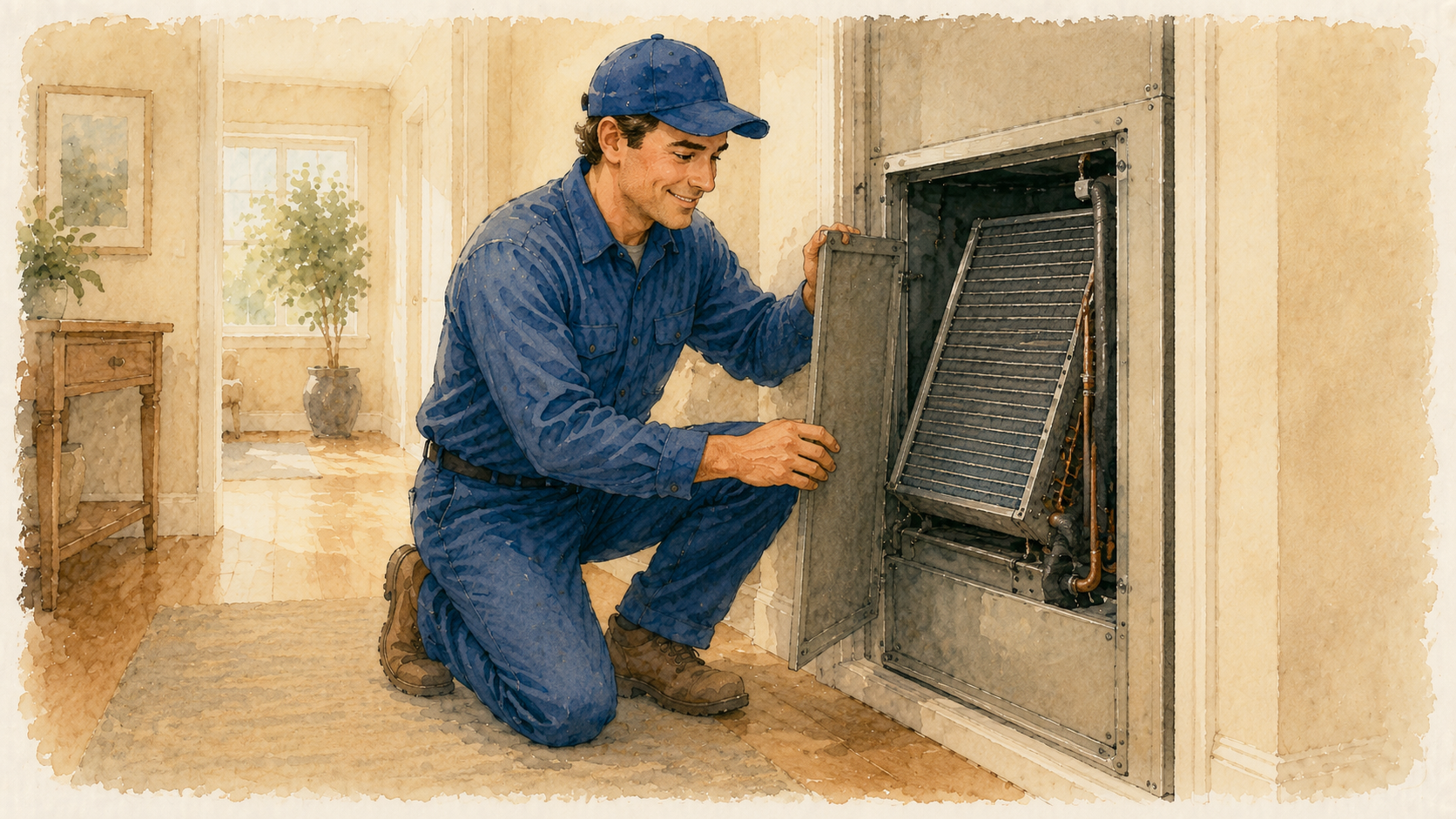
The evaporator coil, inside, gets coated more slowly with the fine dust that slips past your air filter, and it stays damp while the system runs, so it can grow mold and mildew if it’s neglected. Reaching it usually means opening up the air handler, which is why the indoor coil is better left to a technician.
Can you clean AC coils yourself?
Some of it, yes. The outdoor condenser coil is something a careful homeowner can help maintain between professional visits.
Start by turning the power off at the disconnect near the outdoor unit or at the breaker. Clear away leaves, weeds, and debris, and keep at least a couple of feet of open space around the unit. Then gently rinse the fins with a garden hose from the inside out if you can reach, using low pressure so you don’t bend them. Never use a pressure washer, since the fins are delicate and bend easily.
The indoor evaporator coil is a different story. It’s tucked inside the air handler, it’s easy to damage, and getting to it safely takes the right tools and know how. That one is worth leaving to a pro, and it’s a natural part of a maintenance visit. If your cooling is really struggling, our AC repair team can check whether dirty coils, low refrigerant, or something else is behind it.
Common mistakes to avoid
- Using a pressure washer on the coils, which bends the fins and does more harm than good.
- Leaving the power on while you clean the outdoor unit.
- Ignoring the filter, since a clogged filter is what lets the indoor coil get dirty in the first place.
- Packing plants, fencing, or storage right up against the outdoor unit so it can’t breathe.
- Assuming a rinse of the outside handles everything, when the indoor coil still needs a pro.
Key takeaways
- Clean coils are how your AC moves heat, and dirt makes the whole system work harder for less cooling.
- Fouled coils raise your energy bills, strain the compressor, and can even freeze the system up.
- Have coils cleaned at least once a year, and check the outdoor unit more often during a dusty Elk Grove summer.
- You can rinse the outdoor coil gently yourself, but leave the indoor evaporator coil to a technician.
Frequently asked questions
How much does AC coil cleaning cost?
It’s usually part of a seasonal maintenance visit rather than a standalone charge, so the cost depends on the full service and your system. Because it protects efficiency and the compressor, it tends to pay for itself over a summer. For a real number, it’s best to request a quote.
Can dirty coils really stop my AC from cooling?
They can get close. A badly fouled evaporator coil can freeze over, which chokes airflow and leaves you with warm air or no cooling until it thaws and gets cleaned. Long before that, dirty coils just make the system slower and more expensive to run.
How do I keep my coils cleaner between visits?
Change your air filter on schedule, keep the area around the outdoor unit clear, and gently rinse the outdoor fins now and then during the dusty months. Those small habits slow the buildup and make each professional cleaning go further.
Elk Grove AC Pros is a local HVAC information and lead request service. We are not a licensed contractor, and this article is general information, not professional HVAC advice. A licensed local pro should assess your specific system. If your AC is running hard and not keeping up, request a free, no pressure quote and we’ll connect you with local help.