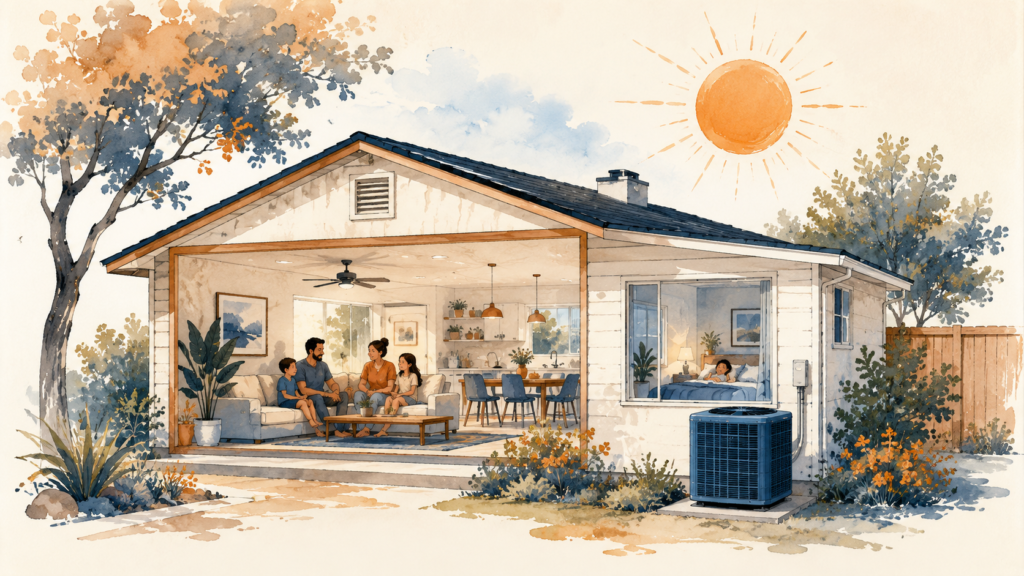
When an Elk Grove heat wave rolls in and it’s 100 degrees or more for days on end, your AC goes from a convenience to a lifeline. A little heat wave AC prep now keeps your system running when you need it most, and knowing the warning signs helps you catch a problem before it turns into a hot, sleepless night. This guide walks you through getting your AC ready, helping it keep up when the valley bakes, spotting an emergency early, and exactly what to do if the system quits at the worst possible time.
Why Sacramento Valley heat waves are so hard on your AC
Here in Elk Grove, a real heat wave means your AC runs almost nonstop. When it’s triple digits outside and you’re asking the system to hold 75 inside, it’s fighting a 25 degree gap hour after hour, and that constant load is what turns a small, ignored problem into a full breakdown.
A slightly dirty filter that coasted through spring will freeze a coil in July. A weak capacitor that’s been fading for months finally gives out on the hottest afternoon of the year. That’s why systems so often fail during a heat wave, not because the heat magically breaks them, but because the heat exposes the weak spot that was already there.
The good news is that most heat wave breakdowns are preventable, and the prep takes an afternoon, not a weekend.
Before the heat wave: your AC prep checklist
Run through this before the forecast turns brutal. Most of it is quick, and it’s the difference between an AC that coasts through the heat and one that quits during it.
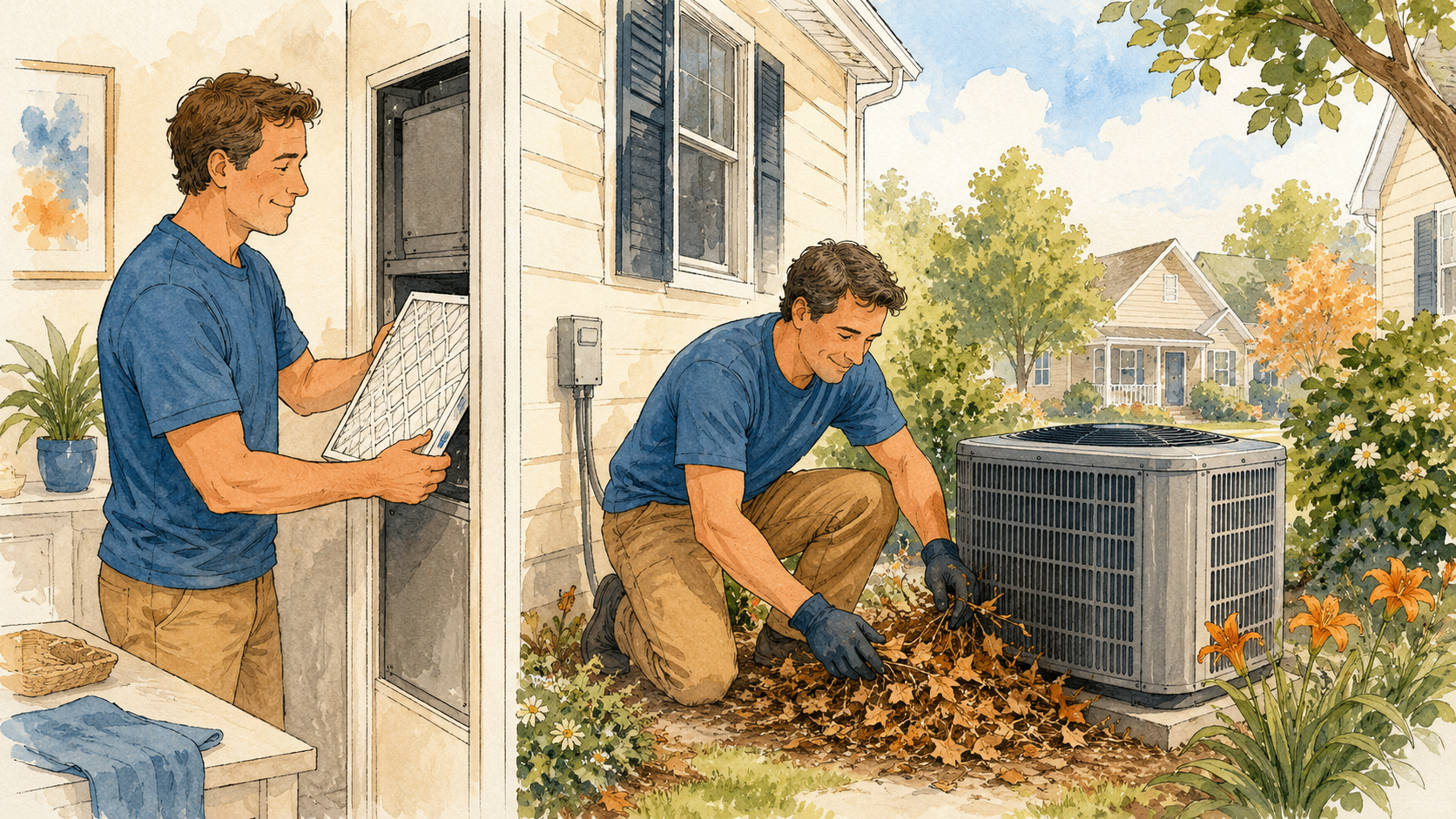
- Change the air filter. A clogged filter is the single most common cause of weak cooling and frozen coils. Swap it if it looks gray.
- Clear the outdoor unit. Pull weeds, leaves, and debris away, and keep at least two feet of open space on all sides so it can shed heat. Gently rinse the fins with a garden hose from the outside in.
- Check the thermostat. Make sure it’s set to cool, and replace the batteries if the screen looks dim.
- Test it early. Run the AC on a mild day before the heat hits. It’s far better to find a problem when it’s 80 out than when it’s 105.
- Close the gaps. Shut blinds on the sunny side of the house, and seal obvious drafts around doors and windows so you’re not paying to cool the outdoors.
- Book a tune up if you’re overdue. If it’s been more than a year, a quick maintenance visit catches the weak parts before they fail. Our AC maintenance page covers what a seasonal service includes.

During the heat wave: help your AC keep up
Once the heat settles in, a few habits keep your system from falling behind and keep your bill from spiking.
Set a steady, reasonable temperature and leave it there. Cranking the thermostat down to 60 does not cool the house any faster, it just makes the system run longer and can help a struggling coil freeze. Around 78 when you’re home is a comfortable target that most systems can actually hold.
Cool the house down early. Run the AC hard in the cooler morning hours so the house is already comfortable before the afternoon peak. In Elk Grove, SMUD charges the most from about 5pm to 8pm, so getting ahead of the heat early also keeps that expensive window shorter.
Help the air move. Run ceiling fans so you feel cooler at a higher setpoint, keep all the vents open, and avoid running the oven or other heat producing appliances in the middle of the day.
Check the filter again. During a long hot stretch the system moves a lot of air, so a filter that was fine in June can clog by late July. A mid season swap keeps the airflow strong.
Signs your AC is struggling in the heat
Catch these early and you can often get help before the system quits completely.
- The air coming out feels warm or barely cool.
- Airflow at the vents is weak.
- You see ice on the copper lines or the indoor unit.
- The system turns on and off every few minutes.
- You hear new grinding, buzzing, or clicking sounds.
- The breaker for the AC keeps tripping.
- The house just can’t get down to your setpoint no matter how long it runs.
Any of these during a heat advisory is worth acting on quickly, especially if you have young children, older adults, or anyone with a health condition at home.
What to do if your AC quits during a heat wave
If the cooling stops when it’s dangerously hot, your first job is staying safe, then getting the system looked at.
Stay cool and hydrated. Move to the shadiest, lowest room in the house, drink water, and if indoor temperatures climb, spend the hottest hours somewhere with cooling, like a local library, mall, or a Sacramento County cooling center. Check on elderly neighbors and pets, who feel the heat fastest.
Do a couple of quick checks. If you see ice on the lines, shut the system off and let it thaw. Look at your filter and swap it if it’s filthy, and check the breaker panel for a tripped switch and reset it once. If it trips again right away, stop and leave it off.
Then call for help. If the simple checks don’t bring the cold air back, don’t sweat it out for days. Our team handles emergency AC repair across Elk Grove and the greater Sacramento area, with same day help often available during peak heat. For the underlying fixes, our AC repair page covers the most common failures we see in the summer.
Keeping vulnerable people and pets safe
A hot house is more than uncomfortable, it can be a real health risk. Older adults, infants, and anyone with a heart or breathing condition are the most sensitive to heat, and so are pets. Watch for heavy sweating, dizziness, headache, nausea, or confusion, and move that person somewhere cooler and get them water right away. If someone seems truly unwell in the heat, treat it as urgent and seek medical help. When your AC is down during an advisory and someone at home is vulnerable, that moves an AC problem from an inconvenience to an emergency.
Common heat wave mistakes to avoid
- Cranking the thermostat to 60 to cool faster. It doesn’t work and it stresses the system.
- Ignoring the filter until the coil freezes.
- Running a system that’s iced over instead of shutting it off to thaw.
- Waiting several days to call once the AC is clearly failing, when every local company is slammed.
- Leaving blinds open on the sunny side and letting the house heat up all afternoon.
Key takeaways
- Prep before the heat: change the filter, clear the outdoor unit, test the AC early, and book a tune up if you’re overdue.
- During the heat, hold a steady setpoint, cool the house early, and keep the air moving.
- Learn the warning signs so you can get help before the system quits.
- If it fails in dangerous heat with vulnerable people home, treat it as an emergency and call right away.
Frequently asked questions
What temperature should I set my AC to during a heat wave?
Around 78 when you’re home is a good balance of comfort and load. Cool the house down earlier in the day so the system isn’t trying to catch up during the hottest afternoon hours, and use fans so a slightly higher setting still feels comfortable.
Is it bad to run my AC nonstop during a heat wave?
Not if the system is healthy and maintained. It’s normal for an AC to run for long stretches when it’s very hot. What matters is watching for trouble signs like warm air, ice on the lines, or short cycling, which mean it’s struggling and needs attention.
How fast can I get emergency AC repair in Elk Grove?
During peak summer, same day help is often available, though busy stretches fill up fast. The sooner you call once your AC is clearly failing, the sooner you get on the schedule.
Elk Grove AC Pros is a local HVAC information and lead request service. We are not a licensed contractor, and this article is general information, not professional HVAC advice. A licensed local pro should assess your specific system. If your home isn’t keeping up with the heat, request a free, no pressure quote and we’ll connect you with local help.