
If you’ve found a puddle under your indoor unit or water dripping where it shouldn’t be, you’re dealing with one of the more common summer AC problems we see. A little condensation is normal, but an AC leaking water into your Elk Grove home usually means a drain or a part needs attention, and letting it run can turn a cheap fix into real water damage. Here’s why your AC leaks water, what you can safely check yourself, and when it’s time to worry and call a pro.
Why your AC makes water in the first place
Your air conditioner doesn’t just cool the air, it pulls moisture out of it. As warm indoor air passes over the cold evaporator coil, water condenses on the coil the same way it beads up on a cold glass of iced tea on a hot Elk Grove afternoon.
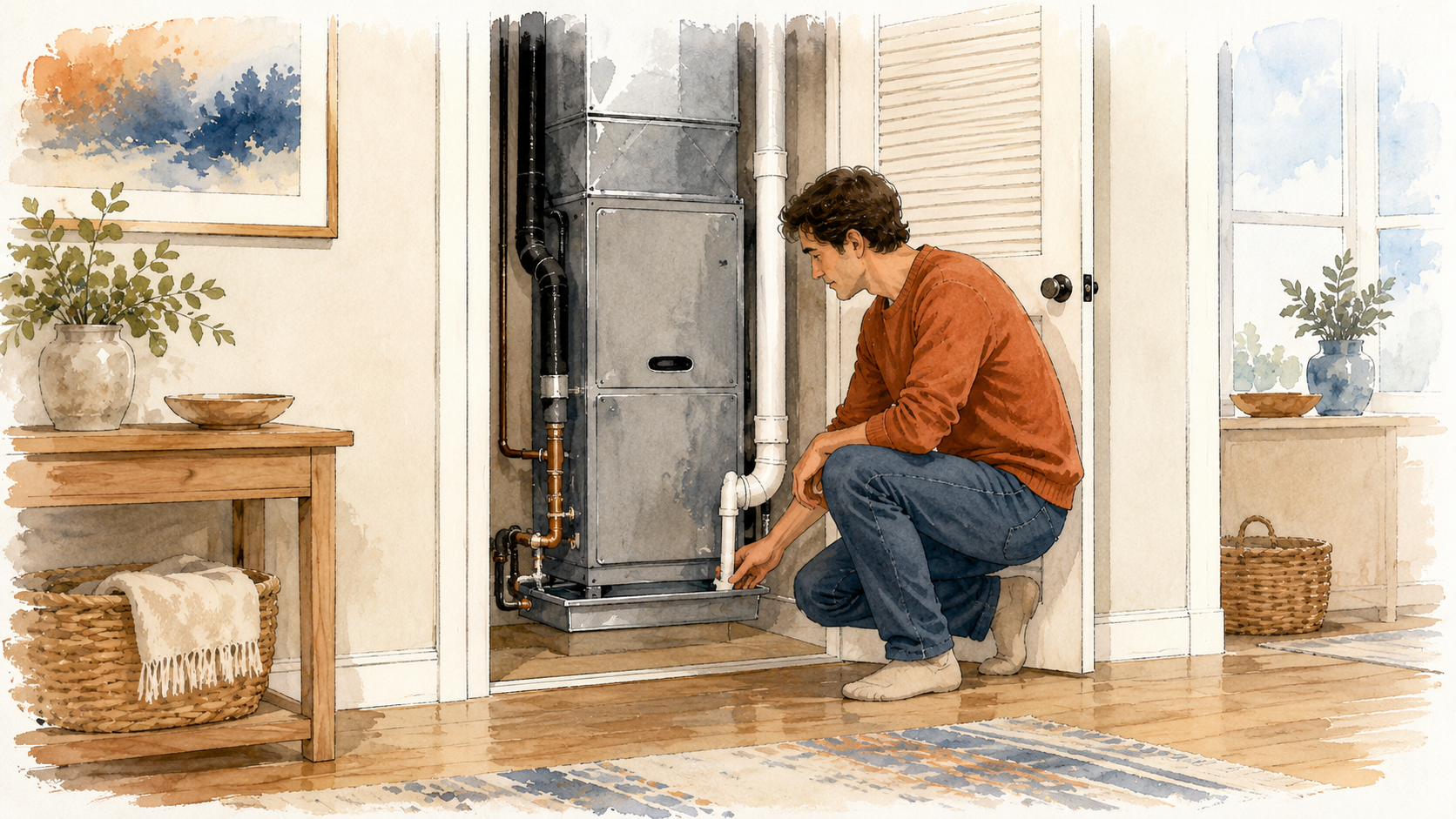
That water is supposed to drip into a pan and flow out through a drain line, usually a white pipe that runs outside or to a floor drain. When everything’s working, you never see it. When you find water inside, it means that normal process got interrupted somewhere.
The most common causes of an AC leaking water
Most indoor water leaks trace back to a handful of causes, and a few of them build up slowly over a long summer of runtime.
- A clogged condensate drain line. This is the number one cause. Algae, dust, and mineral buildup plug the drain, so the water backs up and overflows the pan. Our hard Sacramento Valley water makes this worse.
- A dirty air filter. A clogged filter chokes airflow and can freeze the coil. When that ice melts, it overwhelms the pan and drips everywhere.
- A cracked or rusted drain pan. On older systems, the pan under the coil corrodes and lets water through.
- A broken condensate pump. If your system uses a pump to move water out, a failed pump leaves the water with nowhere to go.
- Low refrigerant. A low charge drops the coil temperature, freezes it, and the same melt and overflow happens.
- A poor installation. A pan that isn’t level or a drain line that wasn’t sloped right can leak from day one.
Where the water is coming from
Knowing the source helps you tell how urgent it is. Water around the indoor air handler, often in a closet, attic, or garage, points to the drain line, pan, or a frozen coil. That’s the leak that damages ceilings and floors, so it’s the one to act on fast.
A little water around the outdoor unit is usually normal on a humid morning or right after the system cycles, so don’t panic about a small damp spot outside. Steady pooling outdoors, though, can still signal a drain problem worth a look.
What you can safely check yourself
Before you call, a few simple checks can either solve the problem or tell the pro exactly what’s happening.
First, turn the system off at the thermostat. Running an AC that’s leaking water only adds to the damage, and a slow drip you barely notice can soak drywall and warp flooring in a few days. Then soak up the standing water so you can see whether it keeps coming back. Keep a towel and a small container handy to catch any drips while you work.
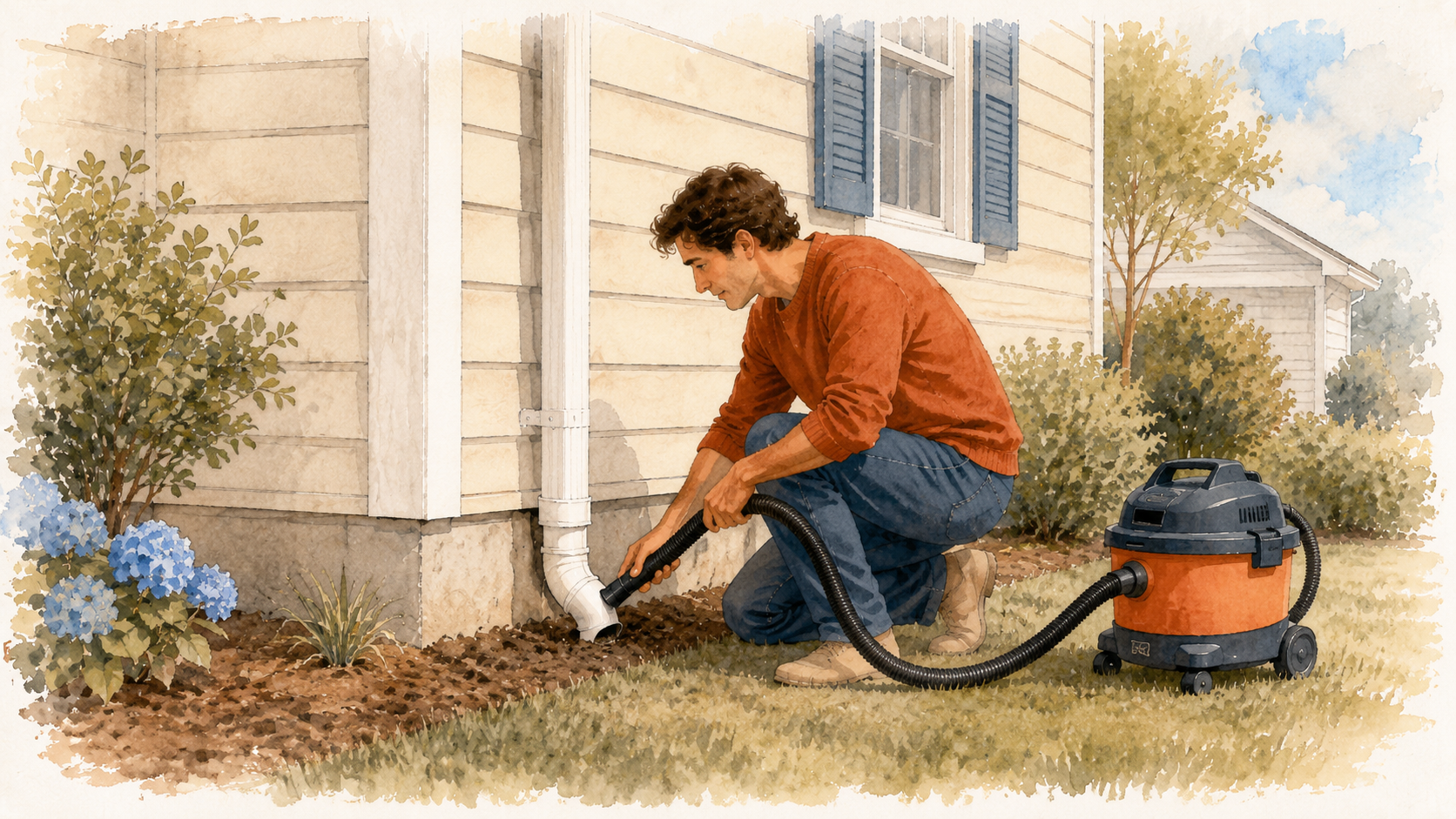
Check the air filter and swap it if it’s gray and clogged. Look for ice on the coil or the copper lines, and if you see any, leave the system off and let it thaw fully. If you’re handy, you can clear a clogged drain line by finding the outdoor end of that white pipe and pulling the clog with a wet dry vacuum. If your system has an access point near the indoor unit, a cup of distilled vinegar poured into the drain a few times a year helps keep it clear.
If none of that stops the leak, or you’re not comfortable with the drain line, it’s time for a technician. Our AC repair team handles leaks like these across Elk Grove and the greater Sacramento area.
When to worry and call for help right away
Some leaks can wait a day. Others shouldn’t. Treat it as urgent when any of these are true.
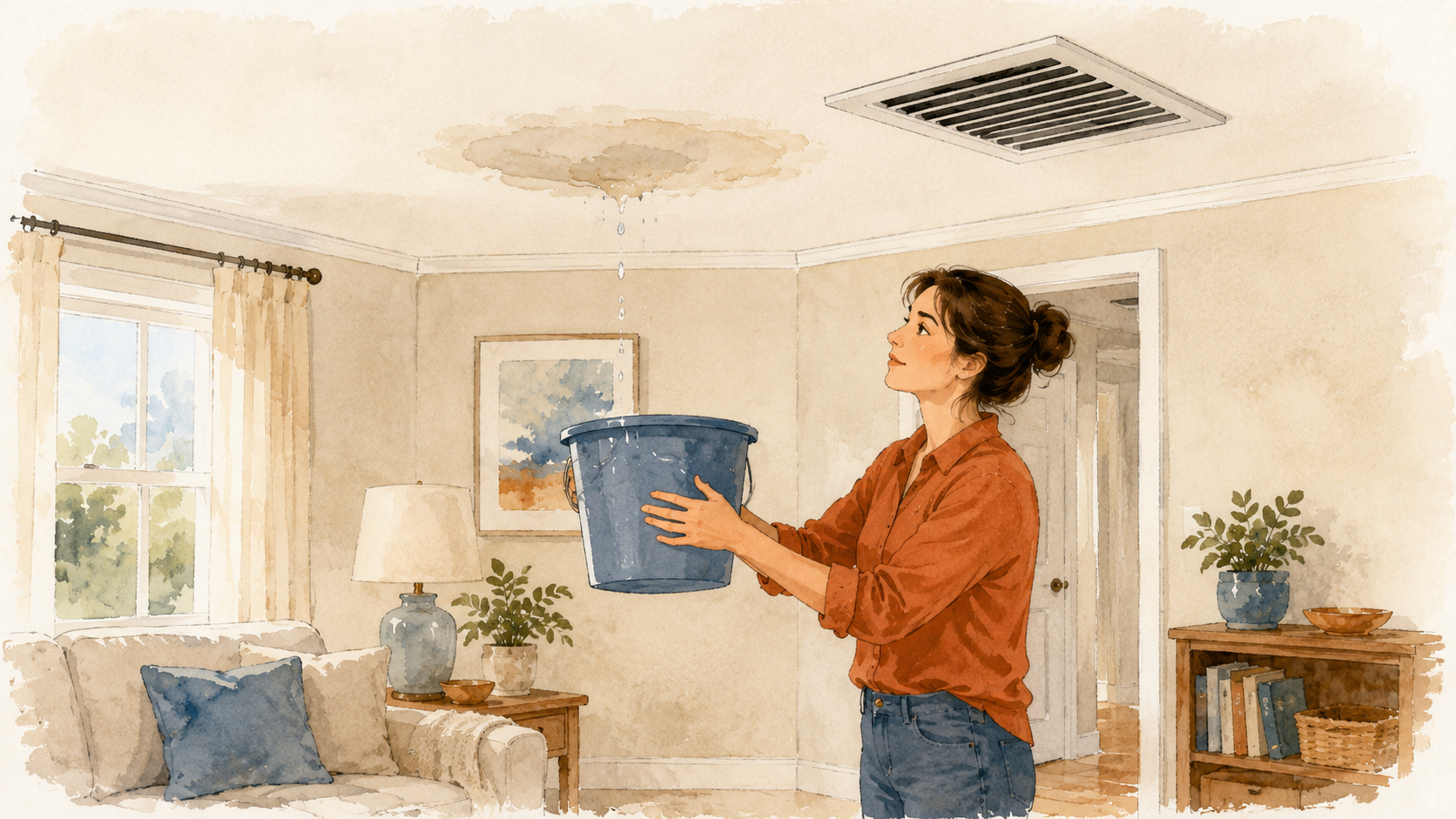
- Water is actively dripping onto a ceiling, wall, or floor, or you see staining and sagging.
- You smell or see mold near the unit, which grows fast in the warm, damp spot around a leaking coil.
- The leak keeps coming back after you clear the drain, which usually means a deeper clog, a bad pan, or a refrigerant problem.
- There’s ice on the system that keeps returning, a sign of low refrigerant or an airflow problem a pro needs to diagnose.
- The water is near electrical parts of the unit.
Water and an air conditioner are a bad mix, and a slow indoor leak can quietly cause a lot of damage before you notice it. When in doubt, shut it off and get it looked at. For after hours situations during a heat wave, emergency AC repair is available.
Why Elk Grove summers make this worse
During a long Sacramento Valley summer, your AC runs for hours at a stretch, which means it’s producing water almost nonstop. A drain line that was fine in spring has all season to collect algae and mineral scale until it finally clogs.
We see a wave of these calls every July, when a drain that quietly collected buildup all spring finally backs up during the hottest week of the year. That’s also why a spring tune up pays off. A technician flushes the drain, checks the pan, and confirms the coil and refrigerant are in good shape before the heat arrives. Our AC maintenance guide covers what a seasonal service includes, and it’s a lot cheaper than repairing a water stained ceiling.
Common mistakes to avoid
- Letting the system keep running while it leaks. Every hour adds to the water damage.
- Ignoring a small drip because it seems minor. Slow leaks cause mold and rot over time.
- Forgetting the filter. A clogged filter is behind a surprising number of frozen coils and leaks.
- Pouring bleach into the drain line. It can damage some parts. Distilled vinegar is the safer choice.
- Assuming any water outside is a problem. A little is normal.
Key takeaways
- A little condensation is normal, but water inside your home means a drain or part needs attention.
- A clogged condensate drain line is the most common cause, followed by a dirty filter and a frozen coil.
- Turn the system off, soak up the water, check the filter, and clear the drain if you can.
- Call a pro if the leak keeps coming back, you see mold or ceiling damage, or the coil keeps freezing.
Frequently asked questions
Is it normal for my AC to leak water?
A small amount of water around the outdoor unit on a humid day is normal. Water inside your home, around the indoor air handler, is not, and it usually points to a clogged drain, a dirty filter, or a frozen coil.
Can I run my AC while it’s leaking water?
It’s best not to. Running it keeps producing water and adds to the damage. Turn it off, deal with the standing water, and either clear the drain or call for repair.
How do I clear a clogged AC drain line?
Find the outdoor end of the white drain pipe and use a wet dry vacuum to pull the clog out. To keep it clear, pour a cup of distilled vinegar into the drain access a few times during the cooling season. If the clog is stubborn or keeps returning, a technician can flush the whole line.
Elk Grove AC Pros is a local HVAC information and lead request service. We are not a licensed contractor, and this article is general information, not professional HVAC advice. A licensed local pro should assess your specific system. If your AC is leaking water, request a free, no pressure quote and we’ll connect you with local help.