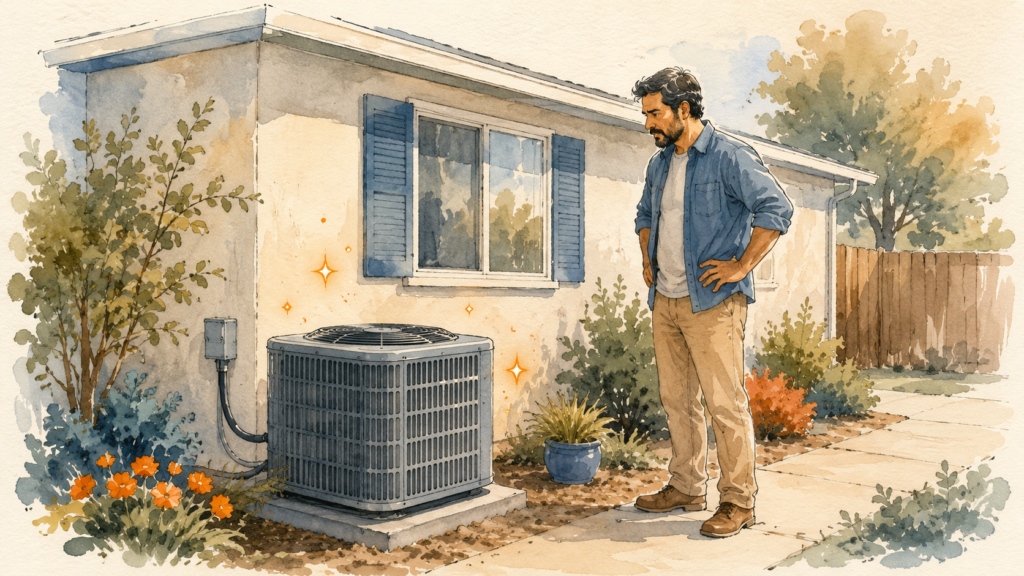
Your air conditioner almost never quits out of nowhere. It usually drops hints for days or weeks first, and the signs your AC is about to break down are easy to catch once you know what to listen and look for. Spotting them early in an Elk Grove summer is the difference between a small, planned repair and a dead system on the hottest afternoon of the year. Here are the six warning signs that matter most, what each one means, and when it’s time to call a pro.
Why your AC warns you before it quits
An air conditioner is a system of parts that wear at different rates. A capacitor weakens, a coil gets dirty, refrigerant slowly drops, a motor bearing starts to drag. Long before any one of those fails completely, the system starts working harder and showing it.
That’s good news, because it means you get a heads up. The homeowners who get stuck sweating through a breakdown are usually the ones who noticed something felt off and hoped it would sort itself out. It won’t. Catching the signs your AC is about to break down early gives you time to fix it on your schedule, not during an emergency.

6 warning signs your AC is about to break down
Any one of these is worth paying attention to. Two or more together, especially during a heat wave, means you shouldn’t wait.
1. The air feels warm or weak
The most obvious sign is cooling that just isn’t keeping up. If the air at your vents feels lukewarm, or the flow is weak even with a clean filter, something’s wrong. It could be low refrigerant, a struggling compressor, or a failing capacitor that can’t give the system the push it needs. Warm air on a triple digit day is your AC telling you it’s near the edge.
2. New or strange noises
A healthy system runs with a steady, familiar hum. Start paying attention when you hear something new. Buzzing or humming from the outdoor unit often points to a failing capacitor. Grinding or screeching can mean a motor bearing going bad. Loud banging or clanking is the sound you least want to hear, because it usually means trouble deep inside the compressor, the most expensive part to replace.
3. Odd smells when it runs
Your AC shouldn’t smell like much of anything. A hot or burning smell can mean overheating wiring or a motor in distress, and that’s a shut it off right away situation. A musty or moldy smell points to moisture building up where it shouldn’t, often a drainage or coil problem that gets worse the longer it runs.
4. It turns on and off every few minutes
This one has a name in the trade: short cycling. Instead of running a steady cycle, the system kicks on, runs briefly, shuts off, and repeats. It’s hard on the equipment and a classic sign of a deeper issue, like an overheating compressor, low refrigerant, a frozen coil, or a failing control part. A system that short cycles is burning through its own life fast.
5. Your energy bill jumps for no reason
A failing air conditioner works harder to do the same job, and that shows up on your bill. If your SMUD statement climbs well beyond what the weather explains, and nothing else in the house changed, the AC is a likely culprit. A weak capacitor, low refrigerant, or a dirty system all force the unit to draw more power while cooling less.
6. Water, ice, or leaks around the unit
Moisture where it doesn’t belong is a red flag. Water pooling around the indoor air handler can mean a clogged drain or a frozen coil that’s melting. Ice on the copper lines or the coil is never normal and usually signals low refrigerant or an airflow problem. Left alone, a frozen system can quickly damage the compressor.
What to do when you spot the signs
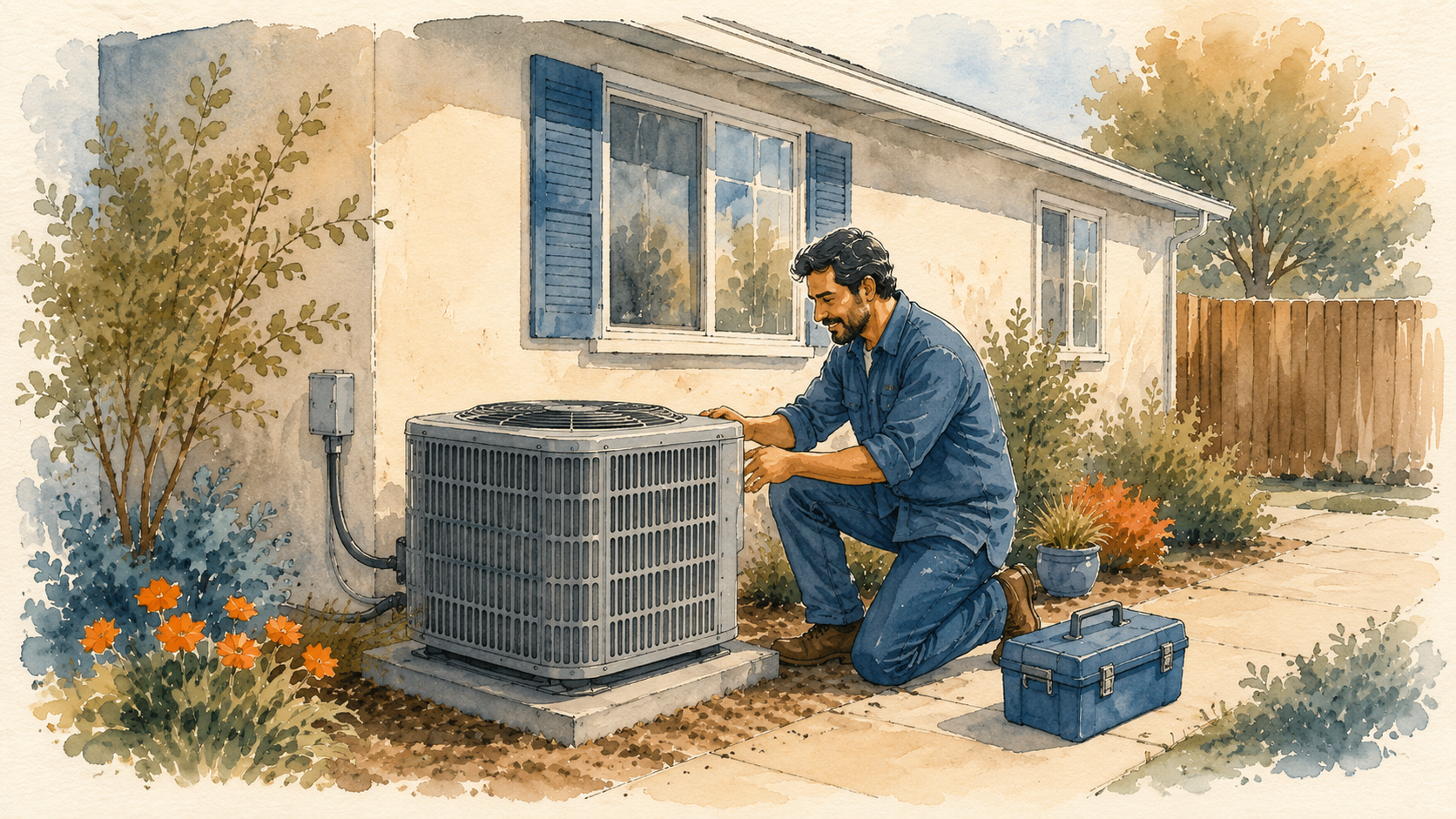
Noticing one of these doesn’t mean you need to panic, but it does mean you should act instead of wait. Start with the couple of things you can safely check yourself.
Change the air filter if it’s dirty, since a clogged filter causes a surprising number of these symptoms. Make sure the thermostat is set correctly and its batteries are fresh. Clear leaves and debris away from the outdoor unit so it can breathe. If you see ice, shut the system off and let it thaw fully before running it again.
If the warning sign is still there after those basics, or you spot burning smells, loud banging, or repeated breaker trips, it’s time for a technician. Our AC repair team handles these across Elk Grove and the greater Sacramento area, and catching a problem at the warning stage is almost always cheaper than waiting for the full breakdown.
How Elk Grove summers speed up a breakdown
Here in the Sacramento Valley, your AC runs long and hard from late spring into fall. That constant load is exactly what pushes a weak part over the edge. A capacitor that might have limped along for another year in a mild climate gives out in July when the system is running almost nonstop.
We see the same pattern every summer. A homeowner mentions their AC has been a little noisy or not quite as cold for a couple of weeks, then it dies on the first 105 degree day when every repair company in town is slammed. The warning signs were there. The heat just set the timeline. That’s also why a spring tune up pays off, because a technician can catch a fading capacitor or low refrigerant before the heat finds it for you. Our AC maintenance guide covers what a seasonal service includes.
Common mistakes to avoid
- Ignoring a small change because the AC still sort of works. Warning signs get worse, not better.
- Repeatedly resetting a tripping breaker instead of finding out why it trips.
- Running a system that’s iced over or making a burning smell instead of shutting it off.
- Cranking the thermostat way down to force more cooling, which just stresses a struggling system.
- Waiting until peak heat to call, when schedules are full and a simple fix has become a big one.
Key takeaways
- Your AC almost always warns you before it fails, so early signs are a gift, not a nuisance.
- The big six: warm or weak air, new noises, odd smells, short cycling, a rising bill, and water or ice.
- Do the safe basics first, filter, thermostat, clear the outdoor unit, then call a pro if the sign remains.
- Elk Grove’s long hot summers push weak parts to fail fast, so a spring tune up is worth it.
Frequently asked questions
How long can my AC run with a warning sign before it fails?
There’s no set clock. Some systems limp along for weeks, others fail within days, especially under heavy summer load. The safest approach is to treat any clear warning sign as a reason to check it now rather than gamble on how long it will hold.
Is it cheaper to repair at the warning stage or wait?
Almost always cheaper to act early. A failing capacitor caught in time is a small repair. Let it take out the compressor and you’re looking at a far bigger bill, or even a full replacement. Early attention protects the expensive parts.
Can regular maintenance prevent these breakdowns?
To a large degree, yes. A seasonal tune up catches weak capacitors, low refrigerant, dirty coils, and airflow problems before they turn into a failure. It doesn’t make a system last forever, but it heads off most of the surprise breakdowns we see during Elk Grove heat waves.
Elk Grove AC Pros is a local HVAC information and lead request service. We are not a licensed contractor, and this article is general information, not professional HVAC advice. A licensed local pro should assess your specific system. If your AC is showing any of these warning signs, request a free, no pressure quote and we’ll connect you with local help.