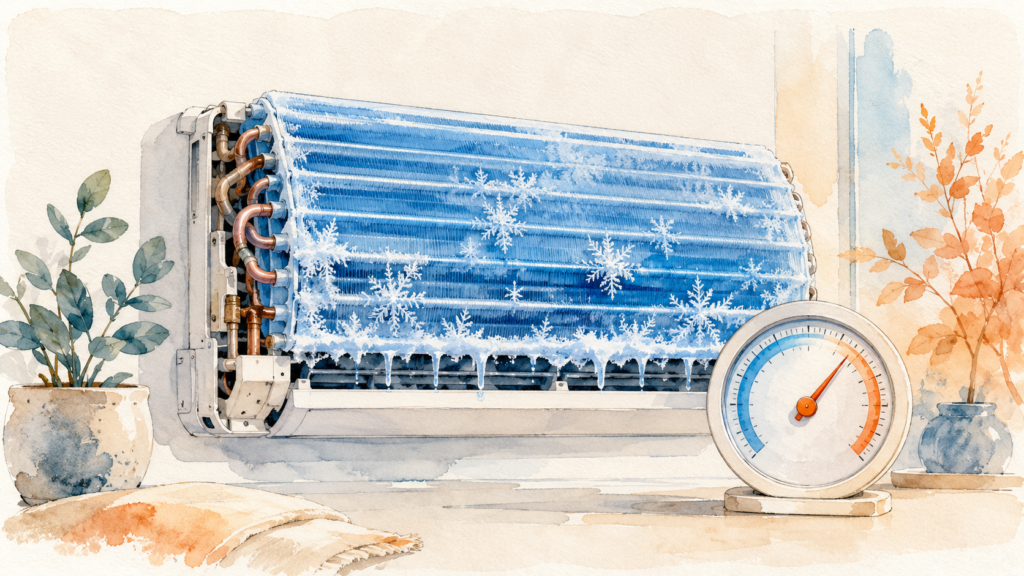
It’s the middle of a July afternoon in Elk Grove, the thermostat is set to 74, and the system has been humming along all day. But the house keeps getting warmer, not cooler. You walk over to a vent, hold your hand up, and the air coming out feels weak and barely cool. Then you go check the indoor unit and spot something that stops you cold: a sheet of ice wrapped around the copper and the coil, with water starting to drip as it melts.
That ice is the classic sign of frozen AC coils, and it’s one of the more confusing problems a homeowner runs into. It seems backwards that an air conditioner working in triple digit heat could freeze up, but it happens all the time here in the Sacramento Valley. The good news is the cause is usually something simple, and catching it early keeps a cheap fix from turning into an expensive one.
What frozen AC coils actually are
Your central air system has two coils. The one outside is the condenser coil. The one inside, tucked into the air handler or on top of your furnace, is the evaporator coil. That indoor coil is where the real cooling happens.
Cold refrigerant flows through the evaporator coil while your blower pushes warm household air across it. The coil pulls heat and moisture out of that air, which is why you get cool, drier air at the vents. As long as enough warm air keeps moving across it, the coil never actually drops to freezing.
When that balance breaks, the coil gets too cold. Moisture in the air hits the chilled surface and turns to frost instead of draining away as water. That frost builds into ice, and once ice forms it blocks even more airflow, so the problem snowballs fast. Within an hour or two you can have a solid block of ice and an AC that’s blowing warm air while running full blast.
The signs your coils are frozen
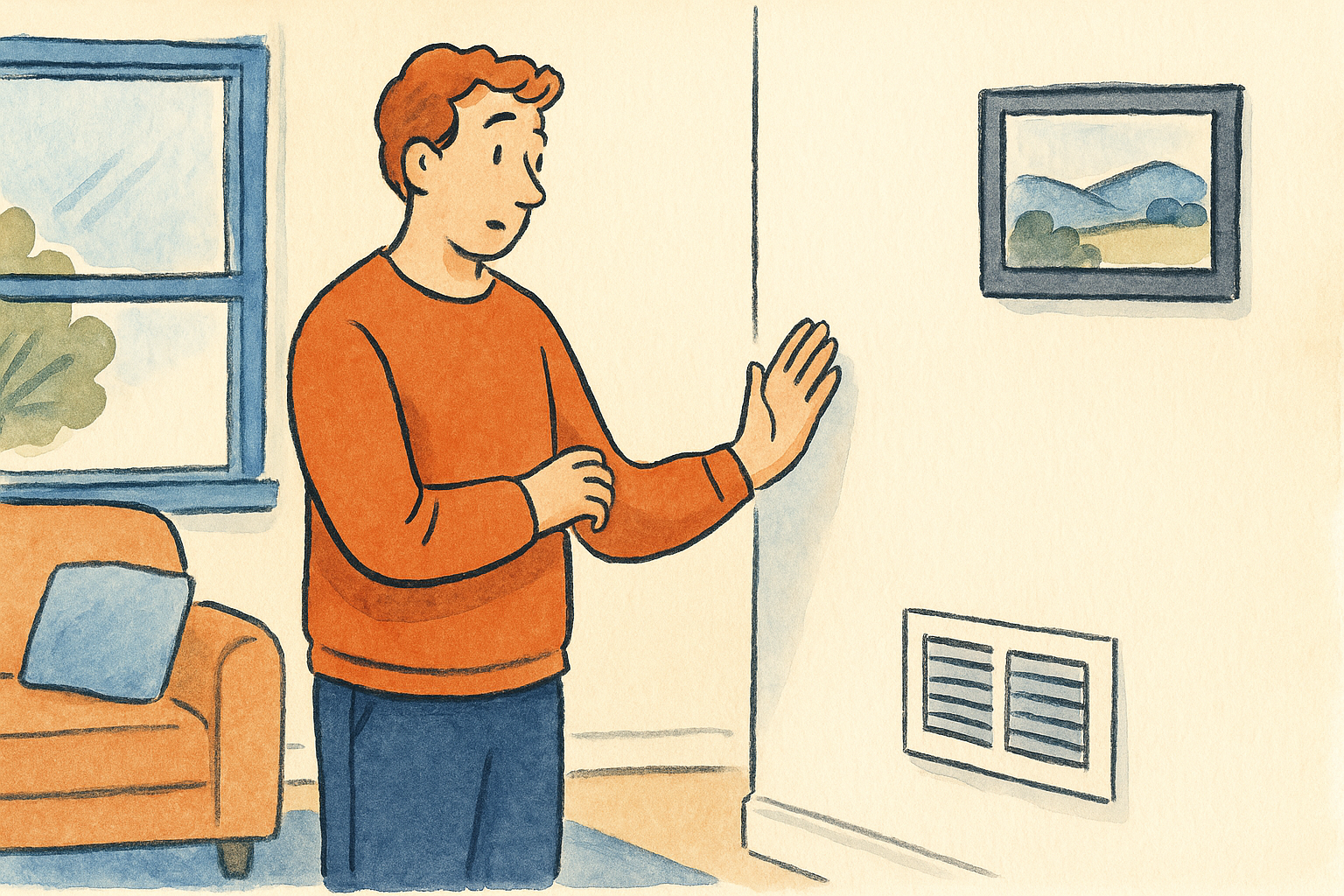
You won’t always see the ice right away, since the evaporator coil is hidden inside the cabinet. The clues that point to a freeze up are warm or weak air at the vents while the system runs, visible frost on the copper refrigerant line or the outdoor unit, and water pooling around the indoor unit as the ice melts.
You may also notice a system that runs and runs but never reaches the set temperature, often paired with a higher than normal power bill, since the AC is working hard and cooling nothing.
What causes frozen AC coils
Almost every freeze up traces back to one of two things: not enough air moving across the coil, or not enough refrigerant in the system. Here are the usual culprits.
A dirty air filter
This is the number one cause, and the easiest to prevent. When the filter clogs with dust, pet hair, and Valley pollen, it chokes off the airflow the coil needs to stay above freezing. Change your filter every 30 to 90 days, and check it monthly during our long cooling season when the system runs hard.
Blocked vents and closed registers
Airflow problems don’t stop at the filter. Supply vents buried behind furniture, closed registers in unused rooms, or blocked return vents all cut down the air crossing the coil. Keeping registers open and clear helps the whole system breathe.
A dirty evaporator coil
Over the years a film of dust and grime coats the coil itself, acting like a blanket that traps cold and drops the surface temperature. A professional coil cleaning during a yearly service clears this up. You can read more in our guide on why coil cleaning matters and how often to do it.
Low refrigerant from a leak
When refrigerant runs low, usually because of a slow leak, the pressure inside the coil drops and the coil temperature falls below freezing even with good airflow. Low refrigerant is never something you top off and forget, because the refrigerant doesn’t get used up. If it’s low, there’s a leak, and that leak needs a licensed pro to find and repair.
A weak blower or slow fan
If the blower motor is failing or set to too low a speed, it can’t push enough air across the coil. A worn fan, a bad capacitor, or a wiring issue can all starve the coil of airflow.
Running the AC on a cool night
Air conditioners aren’t built to run when it’s already cool outside. If you leave the system cooling overnight and Elk Grove drops into the 50s, the coil can freeze simply because the air feeding it is too cold. If you notice ice only in the mornings, this is often why.

What to do the moment you find frozen coils
Finding ice feels alarming, but the first steps are simple.
Turn the cooling off right away. At the thermostat, switch the mode from Cool to Off. Running a frozen system forces liquid refrigerant back toward the compressor, and the compressor is the single most expensive part in your air conditioner. Protecting it is the whole reason you shut down fast.
Switch the fan to On. Set the thermostat fan from Auto to On. With cooling off and the blower running, room temperature air moves across the coil and melts the ice much faster. A full thaw usually takes a few hours, so be patient and don’t rush it.
Never chip or scrape the ice. The coil and refrigerant lines are thin and easy to puncture. One slip with a screwdriver can turn a simple thaw into a major repair. Let it melt on its own.
Check and swap the filter. While it thaws, pull the air filter. If it’s gray and packed with dust, replace it. This one step fixes a huge share of freeze ups.
Once everything is fully thawed and dry, and you’ve cleared any obvious airflow blocks, you can switch cooling back on and feel the vents. If cold air returns and stays cold, an airflow problem was likely the cause. If it freezes again or still blows warm, the issue runs deeper and it’s time for a pro.
Common mistakes to avoid
The biggest mistake is ignoring the ice and letting the system keep running. People assume a struggling AC just needs to try harder, but a frozen unit cools nothing and risks the compressor every minute it runs.
Another common one is adding refrigerant as a quick fix. Refrigerant isn’t a fluid that runs low with normal use, so a “recharge” without finding the leak just delays the real repair and puts more refrigerant into the ground.
Cranking the thermostat way down to force more cold air is a mistake too. It doesn’t cool the house any faster, and it makes freezing more likely by running the coil harder. And closing vents in unused rooms to “save energy” often backfires by choking airflow and freezing the coil.
When to call a pro
If your coils freeze once and a fresh filter fixes it, you’re probably fine to move on. But some situations call for a trained technician, and putting them off usually costs more later.
Call a pro if the coils freeze again after a thaw and filter change, if you see oily residue near the refrigerant lines, which points to a leak, if airflow is still weak with a clean filter, or if you hear the blower struggling. These point to refrigerant, coil, or blower problems that need tools, gauges, and a license to handle safely.
A neighbor over in Laguna West called us last summer with an AC blowing warm air during a heat wave. They’d already swapped the filter twice, but the coils kept icing over within a day. The real problem was a slow refrigerant leak, and catching it meant a proper repair instead of a ruined compressor. When a freeze up keeps coming back, that’s your system telling you something needs a closer look. Our AC repair team in Elk Grove can track down the cause and get it fixed right.
How to keep your coils from freezing again
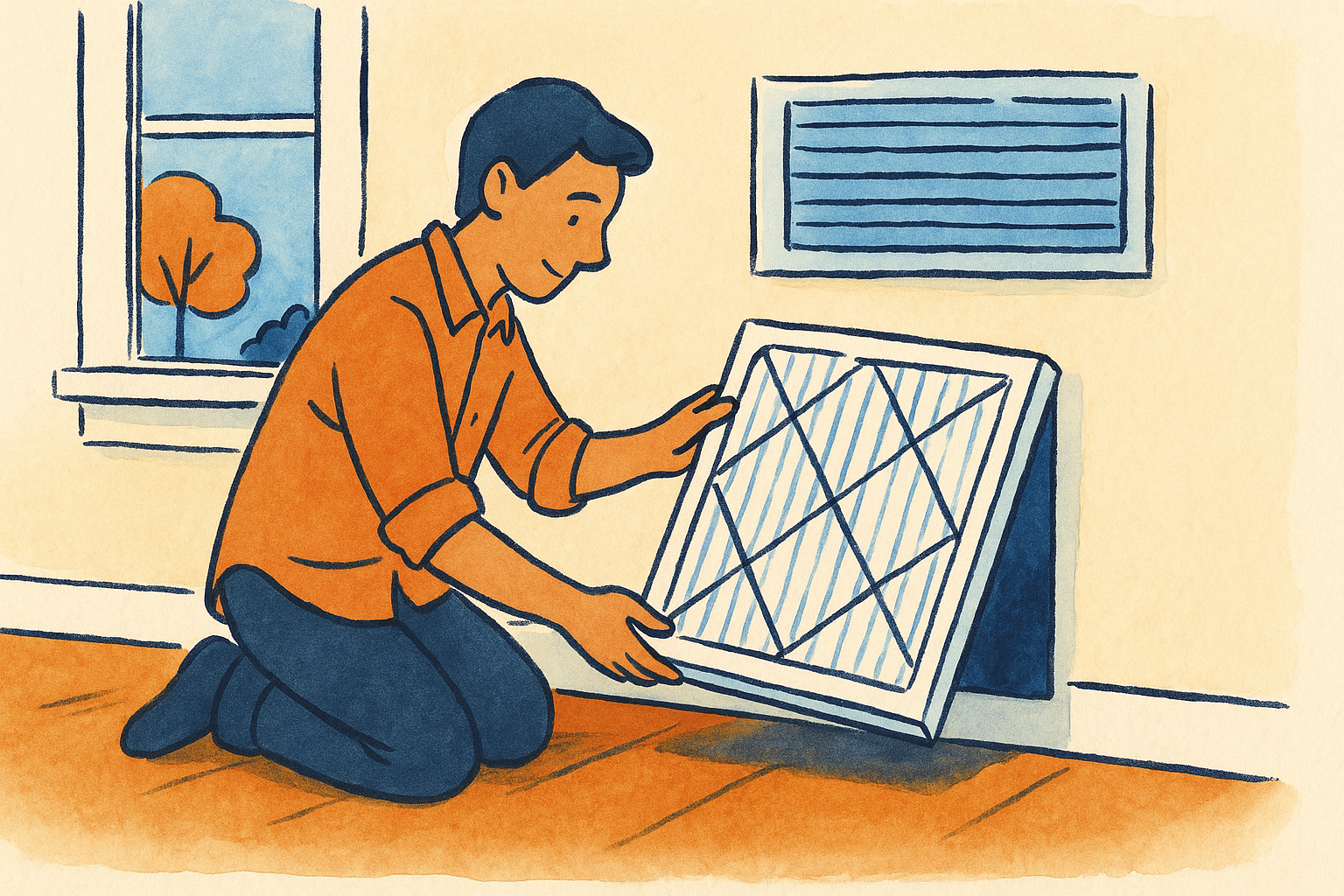
Most freeze ups are preventable with a little routine care. Change your filter on schedule and check it often in summer. Keep supply and return vents open and clear of furniture and rugs. Give the outdoor unit room to breathe by trimming back plants and clearing leaves.
The best safeguard is a yearly tune up before cooling season. A technician cleans the coil, checks refrigerant pressure and the blower, and catches a small leak or a tired part before it leaves you sweating in July. Regular AC maintenance in Elk Grove is far cheaper than an emergency repair, and the Department of Energy’s maintenance guide covers the basics too.
Key takeaways
Frozen coils almost always come from restricted airflow or low refrigerant. The moment you spot ice, shut the cooling off to protect the compressor, set the fan to On to thaw the coil, and check your filter. Never chip at the ice, and never just add refrigerant without fixing the leak behind it. If the freeze up keeps returning, it’s time to bring in a licensed local pro.
Frequently asked questions
Will a frozen AC coil fix itself?
The ice will melt on its own once you turn the cooling off, but the reason it froze won’t fix itself. If you don’t address the airflow or refrigerant problem behind it, the coil will just freeze again the next time the system runs.
How long does it take frozen AC coils to thaw?
Usually a few hours with the cooling off and the fan set to On. A thick block of ice can take longer. Don’t try to speed it up by chipping at it, and don’t turn cooling back on until everything is fully melted and dry.
Can I run my AC while the coils are frozen?
No. Running a frozen system strains the compressor and can cause costly damage, and it won’t cool your home anyway. Shut the cooling off and let the coil thaw completely before you run it again.
Get help from a local Elk Grove pro
Elk Grove AC Pros is a local HVAC information and lead request service for Elk Grove and the greater Sacramento area. We are not a licensed contractor, and this article is general information, not professional HVAC advice. Your system is unique, so a licensed local pro should assess your specific situation before any repair.
If your AC keeps freezing up or blowing warm air, don’t wait for it to quit in the heat. Request a free, no pressure quote and we’ll connect you with a trusted local pro who can find the real cause and get your home comfortable again.