
Every year it plays out about the same way in Elk Grove. May stays gentle, you sleep with the windows cracked, and the air conditioner sits untouched the way it has since October. Then a Tuesday in June hits 104, you push the thermostat down at two in the afternoon, and the house never quite gets there.
That first long stretch of real heat is the hardest day of the year on a home cooling system, and the day phones light up at every HVAC company in the Sacramento Valley. Not because the equipment is bad, but because nobody asked anything of it for eight months and then asked everything at once.
Here’s the encouraging part. Almost everything that fails on that day is visible weeks earlier, on a mild afternoon, with no tools. If you know how to prepare your home for the first heat wave, you find the problem while it’s still small and still on your schedule.
Why the First Heat Wave Catches So Many Systems Out
An air conditioner that’s been idle all winter doesn’t sit still. Dust settles onto the indoor coil. A capacitor slowly weakens. Refrigerant seeps out of a pinhole leak at a rate you’d never notice. Algae grows quietly in the condensate drain line.
None of that shows up in April. On a 78 degree day, a system running at 70 percent of its capacity still cools the house fine, because 70 percent is plenty. An air conditioner with a real problem still looks healthy in mild weather.
Then the valley hits 105 and the margin disappears. The weak capacitor, the dirty coil, and the low charge all announce themselves on the same afternoon. That’s the whole story behind most first heat wave breakdowns.
Start With a Test Run on a Mild Day
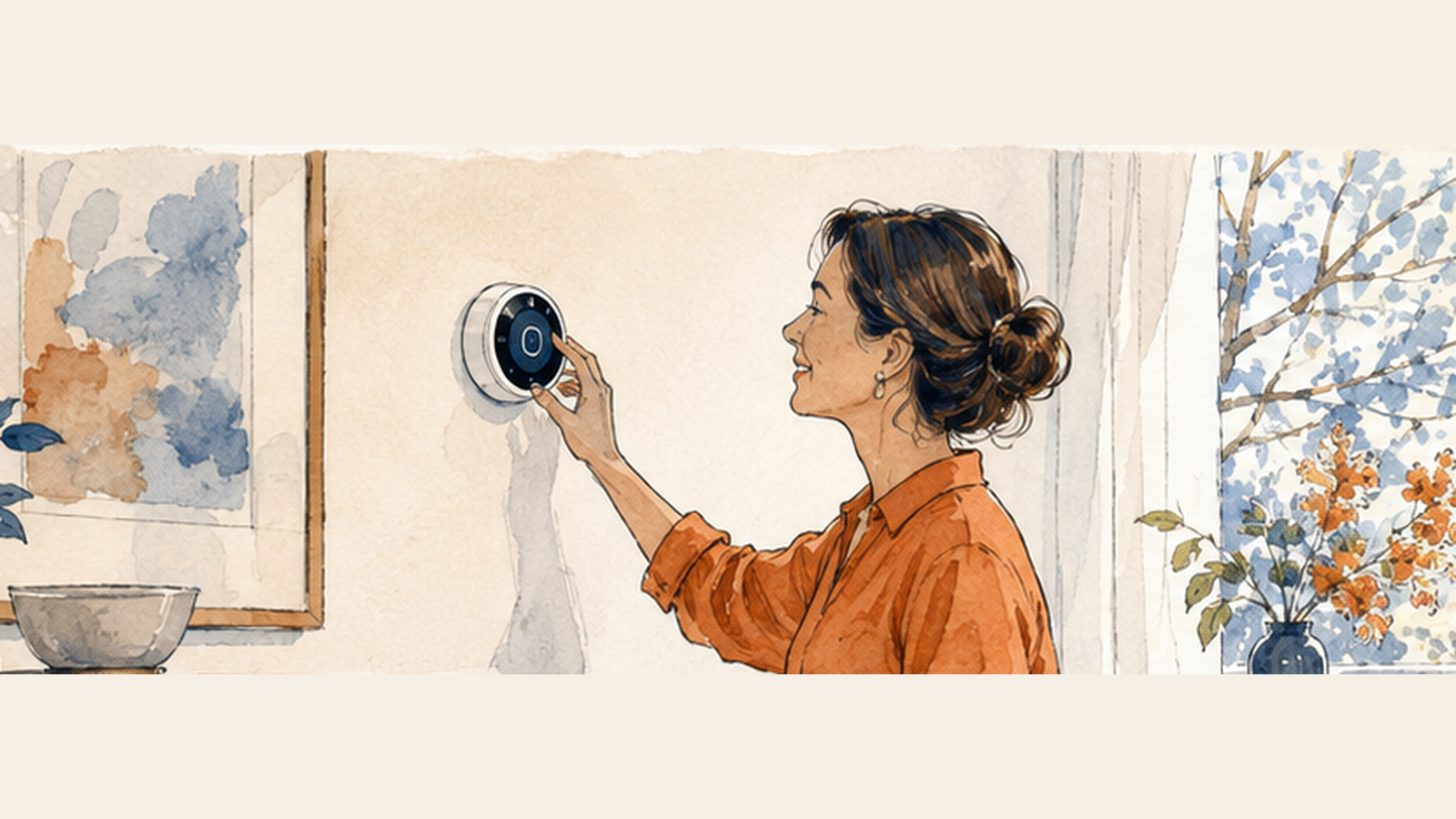
This is the most useful thing you can do, and it costs nothing. Pick an afternoon in the 70s or low 80s. Set the thermostat to cool, drop the setpoint about five degrees below room temperature, and let it run a full 20 minutes.
Then go look and listen. The outdoor unit should start within a minute of the thermostat calling, and the fan on top should spin up smoothly and stay spinning. Inside, air at a supply vent should feel clearly colder than air at the return grille, often around 16 to 22 degrees colder, though that range varies with the equipment and the day.
Sounds matter more than people realize. A hum with no fan movement often points at a failed capacitor. A hard click then silence, a tripped breaker, a grinding noise, or a new rattle are all worth a call now rather than in July. Our guide to what a rattling AC means covers the common culprits.
A system that hesitates, hums, or trips a breaker on a 75 degree day will not survive a 105 degree afternoon. Finding that out in May is a good day. Finding it out during a heat advisory is not.
Clear the Space Around the Outdoor Unit
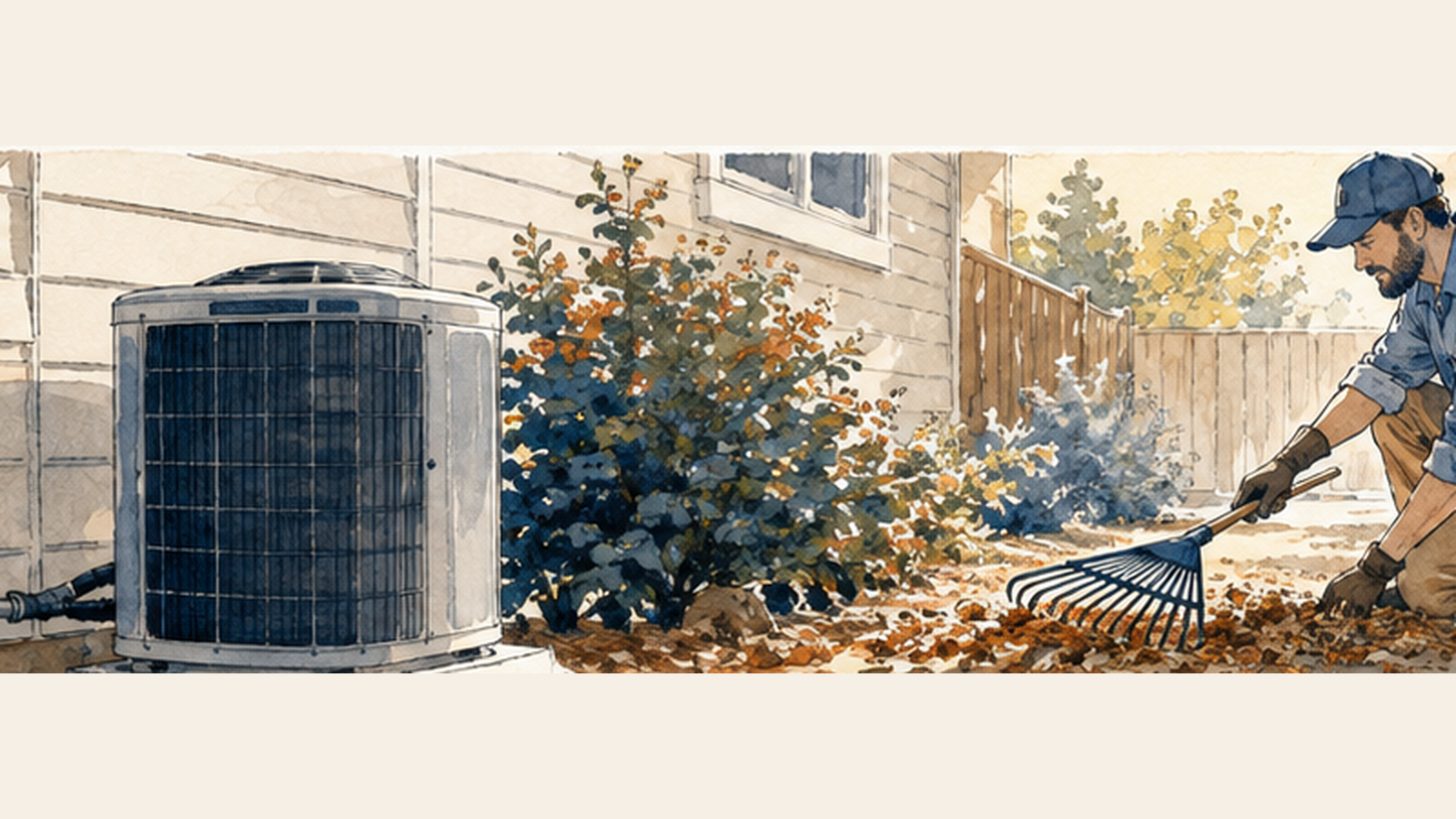
Your condenser dumps heat from inside the house into the outside air, and it can only do that if air moves freely through it. A winter of leaves, an ambitious jasmine vine, or the patio chairs you stacked there in November all get in the way. The Department of Energy suggests keeping about two feet of clearance around the condenser and trimming foliage back.
This bites hardest in Elk Grove’s newer neighborhoods, where the unit often sits in a narrow side yard with the house on one side and a fence three feet away. That’s already a tight corridor for hot air. Add an oleander and the system ends up breathing its own exhaust.
If the fins look dusty, rinse them gently with a garden hose on a normal spray, working top down. Shut the power off at the disconnect box before you touch anything, and skip the pressure washer, since those fins bend easily. Grass clippings and cottonwood fluff clog coils fastest around here, so aim the mower away from the unit.
Change the Filter and Open Up the Airflow Inside
If that filter went through a winter of heating, replace it now no matter how it looks. Most homes need a fresh one inch filter every 30 to 90 days in season, sooner with pets, and a restricted filter is a leading reason systems ice up or struggle on a hot day.
Then walk the house. Check that supply vents aren’t buried under a rug, blocked by the couch you moved in February, or hidden behind boxes in the spare room. Give the return grille the most room, since that’s where the system draws its air.
One myth worth killing: closing vents in unused rooms doesn’t save money, it raises pressure in the duct system and usually makes the whole house cool less evenly. If some rooms already run hot, our post on why one room stays hotter than the rest gets into the real causes.
Set the Thermostat for a Sacramento Valley Summer
Program it before you need it, not while you’re sweating. A schedule that made sense in March may be exactly wrong in July.
The trick that works best in this climate is cooling early. Bring the house down in the late morning while the outside air is still reasonable, then hold a steady setting through the afternoon instead of asking the system to claw back ten degrees at four o’clock when it’s 106 outside. Cool the house early and let it coast.
That habit also lines up with how SMUD prices summer power, since peak rates land later in the day. Check the current rate schedule on your bill, because those hours and prices change. If you’re weighing an upgrade, we covered whether smart thermostats are worth it in Elk Grove. And if yours is an older model, put fresh batteries in now.
Book the Tune Up Before the Phones Light Up
Here’s a scheduling reality nobody mentions. In April and May, most local HVAC companies can get to you in a couple of days. After the first 100 degree stretch, those same companies are triaging no cool calls and booking a week out, with emergency rates on evenings and weekends.
The cheapest week to get an HVAC company out is the week before everyone else needs one. A spring visit covers what you can’t do yourself: cleaning the coils, testing the capacitor and contactor, checking refrigerant pressures, clearing the condensate drain, and measuring the blower’s amp draw.
Our AC tune up checklist shows what a good visit includes, and we covered timing in how often you should service your AC. When you’re ready, our AC maintenance page explains how we match you with a licensed local pro.

Make the House Itself Easier to Cool
Half the battle in a valley summer is keeping heat out of the house in the first place, and none of this needs a technician.
Close blinds on west and south facing windows before noon, not after the room already feels warm. Set ceiling fans to spin counterclockwise, and turn them off in empty rooms, because fans cool people, not spaces. Run the oven and dryer after dark. Check the weatherstripping on the doors you use most.
Pick one backup room, too. A family off Bruceville Road learned this the practical way one July: their two story home stayed fine downstairs and got miserable upstairs, so they moved a fan into the guest room and slept there three nights waiting on a part. Knowing which room holds cool best is worth learning early.
How to Prepare Your Home for the First Heat Wave, Week by Week
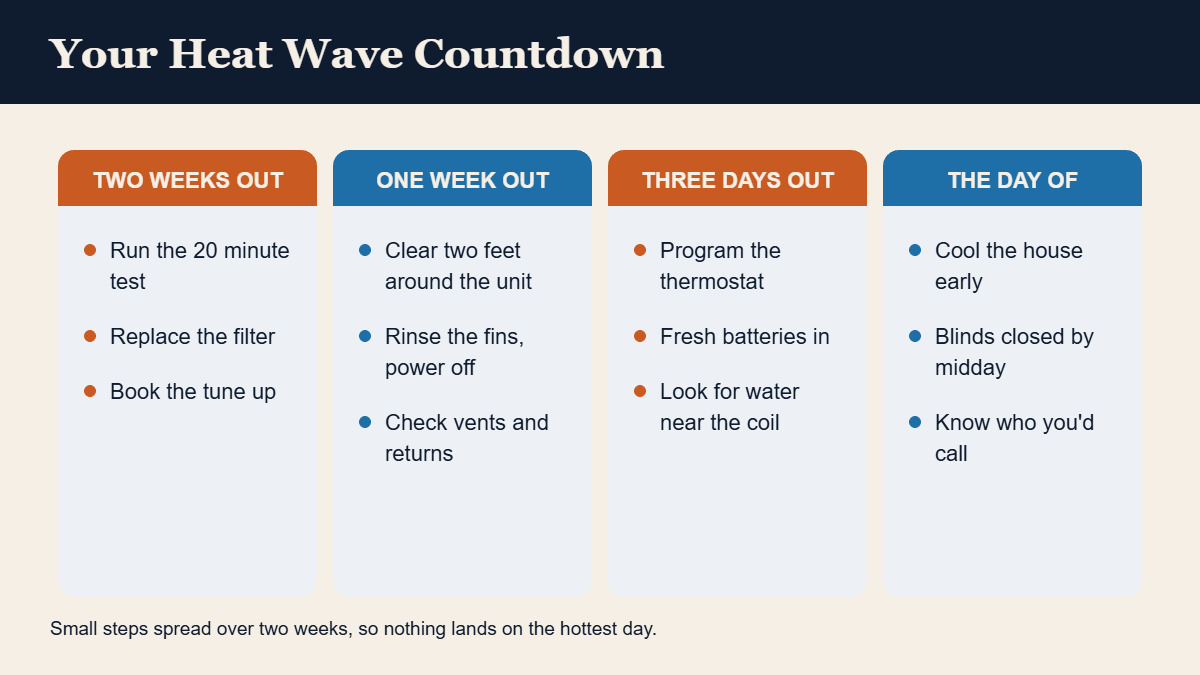
The best way to prepare your home for the first heat wave isn’t one big Saturday project. It’s four small ones spread across a couple of weeks, in roughly this order.
- Two weeks out: run the 20 minute test, replace the filter, and book the tune up.
- One week out: clear two feet around the outdoor unit, rinse the fins with the power off, and walk the house checking vents and returns.
- Three days out: program the thermostat, put fresh batteries in, and look for any water or staining near the indoor unit.
- The day of: cool early, close the blinds by midday, keep the ovens off, and know who you’d call.
Common Mistakes People Make Before a Heat Wave
These come up over and over across Elk Grove and the greater Sacramento area. Waiting for the first hot day to find out whether it works. That’s the day you have the least time and the fewest options.
Cranking the thermostat down to 62 in a hot house. Setting it lower doesn’t cool any faster, since the system only runs at one speed. It just runs longer and costs more.
Wrapping or tarping the outdoor unit to shade it. Anything that restricts airflow makes it work harder, and a shade structure built too close does more harm than the sun ever did.
Ignoring a small water stain near the indoor unit. That’s usually a drain line starting to clog, and it’s a quick fix in May and a ceiling repair in August.
Key Takeaways
- Test the system for 20 minutes on a mild day, weeks before you need it.
- Act early on hums, clicks, grinding, and tripped breakers.
- Keep about two feet clear around the outdoor unit and rinse the fins with the power off.
- Replace the filter after the heating season and keep vents and returns clear.
- Cool the house early in the day rather than fighting the afternoon peak.
- Book the tune up in spring, when local availability is still easy.
Frequently Asked Questions
When should I test my AC in Elk Grove?
April or early May is ideal. You want a mild afternoon and enough runway that if something’s wrong, you can get it fixed before the valley starts hitting triple digits in June.
How long should the test run be?
About 20 minutes. Shorter than that and the system hasn’t settled into a steady state, so you can miss a problem that only shows up once it’s been running a while.
Is it too late if the heat is already here?
Not at all. Swap the filter, clear the outdoor unit, and close the blinds today. Those three take under an hour and often buy back real cooling. If the house isn’t holding temperature, that’s a repair rather than a prep task, and this guide helps you tell whether it’s an emergency.
Do I really need a professional tune up every year?
Annual service is the general recommendation for systems working through summers like ours, since coil cleaning, electrical testing, and refrigerant checks need tools and training. Filter changes and clearing debris stay yours between visits.
Getting Ahead of It
The homeowners who sail through a bad week in July aren’t the ones with the newest equipment. They’re the ones who took an hour in May to prepare their home for the first heat wave.
Elk Grove AC Pros is a local HVAC information and lead request service. We’re not a licensed contractor, and this article is general information rather than professional HVAC advice. Systems and homes vary, so a licensed local pro should assess yours before you act on anything here.
If you’d like a set of eyes on your system before the heat arrives, request a free, no pressure quote and we’ll match you with a licensed local pro serving Elk Grove and the greater Sacramento area.