
You’re finally replacing that tired old system, the contractor is standing in your driveway, and then comes a question you didn’t expect: “Do you want a straight air conditioner, or a heat pump?” For a lot of Elk Grove homeowners, that’s the first time anyone has framed cooling as a choice with two doors. Both keep the house cool. Both sit outside and hum along on a hot afternoon. So what’s the actual difference, and does it matter here in the Sacramento Valley?
It matters more than most people expect, and less in the way they assume. The summer cooling part is nearly a tie. Where these two systems really part ways is in winter, in what they cost to put in, and in how well they fit the way our valley weather actually behaves. Let’s walk through it in plain terms so you can walk back into that driveway conversation knowing exactly what you’re deciding.
Central air vs heat pump: the real difference
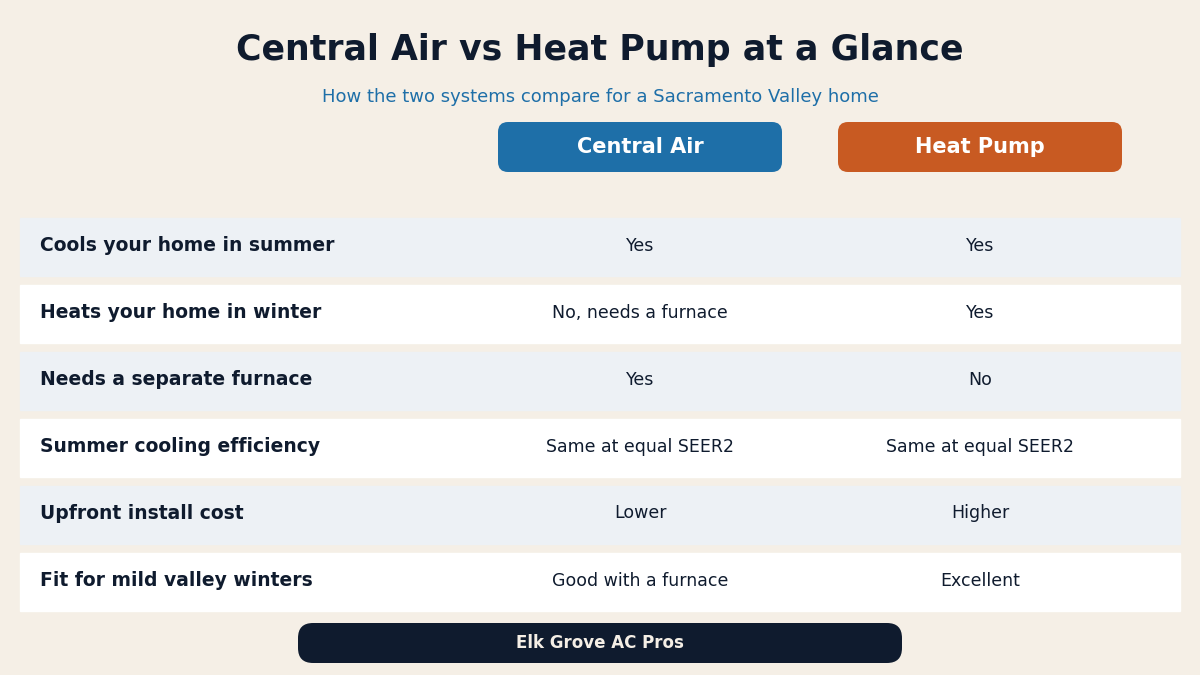
Here’s the short version of the machinery. A central air conditioner has one job, which is to pull heat out of your house and dump it outside. That’s it. It only moves heat in one direction, so it can only cool. To warm your home in winter, a central AC has to be paired with a separate furnace, usually a gas one.
A heat pump is the same basic machine with one clever extra part. It has a reversing valve that lets it run the cycle backward. In summer it pulls heat out of your home just like an AC. In winter it flips around and pulls warmth out of the outside air and moves it indoors. So when you weigh central air vs heat pump, you’re really comparing a cooling only device against one that both cools and heats from a single outdoor unit.
That’s the whole idea in one sentence: a central AC cools, a heat pump cools and heats. Everything else that follows, the cost, the efficiency, the fit for your home, flows out of that one difference.
In a Sacramento summer, do they cool any differently?
This is the part that surprises people. In cooling mode, a heat pump and a central air conditioner work in the exact same way. Same compressor, same refrigerant, same process of moving heat out of your house. If you put a heat pump and a central AC side by side at the same efficiency rating, they’ll cool your Elk Grove home through a 104 degree July afternoon just as well as each other.
Efficiency in cooling comes down to the SEER2 number, not whether the box is called a heat pump or an air conditioner. A 16 SEER2 heat pump and a 16 SEER2 air conditioner will run up about the same power bill keeping you cool. So if summer comfort is all you care about, neither one wins on cooling. You’d never feel the difference on the hottest day of the year.
If you want to go deeper on what that efficiency number means for your bill, our guide on what SEER rating you actually need in Elk Grove breaks it down without the jargon.
Where they split: heating your home in winter
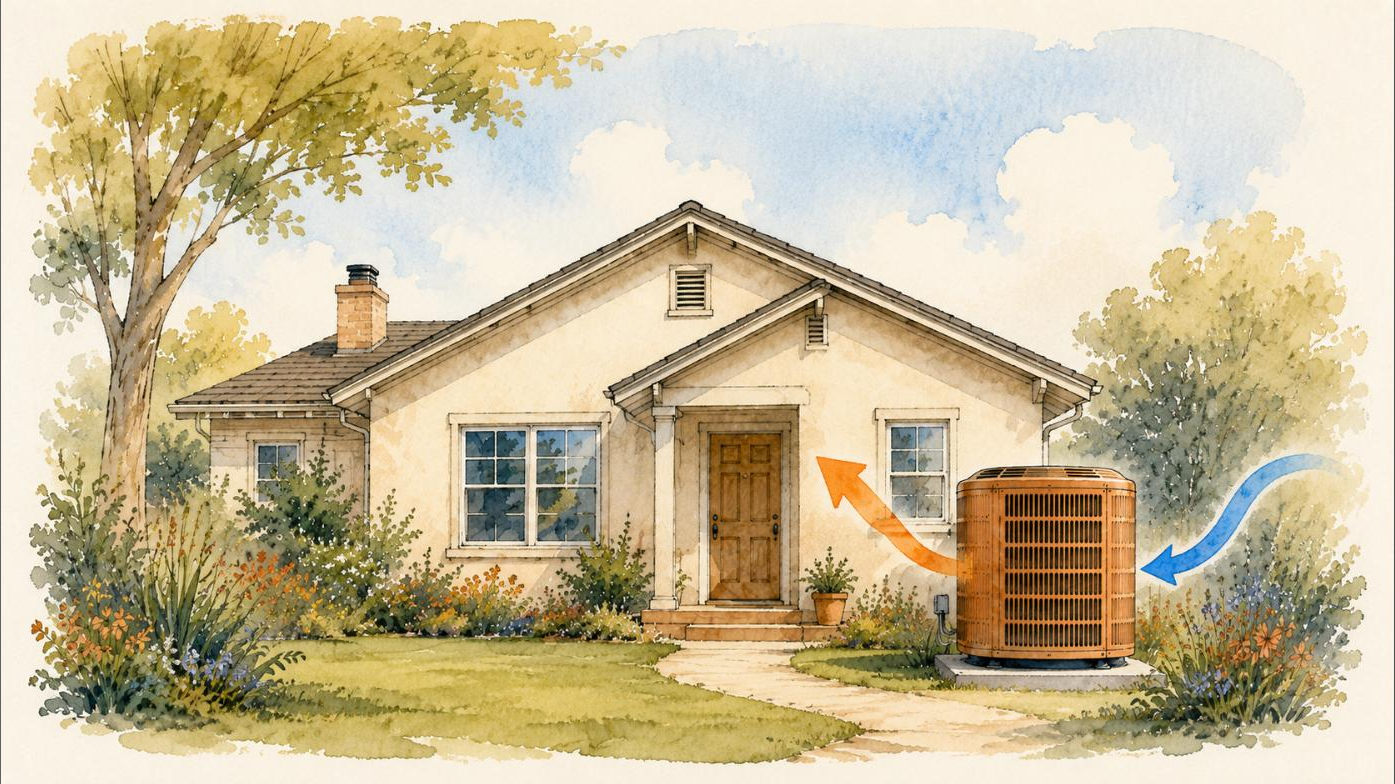
Winter is where the two systems stop being twins. A central AC does nothing in the cold months. Your heat comes from a furnace burning natural gas. A heat pump, on the other hand, becomes your heater. Instead of burning fuel, it moves warmth from the outside air into your home, which is a very efficient way to heat.
And here’s the local angle that matters. The Sacramento Valley has mild winters. We’re not fighting weeks of deep freeze the way the Midwest does. Our winters sit in a range where a modern heat pump does its best work, moving heat cheaply on all but the coldest mornings. That makes our climate close to ideal for a heat pump.
If you already heat with gas and gas is cheap for you, a furnace plus AC can still make good sense. But if you’re all electric, or you’re trying to move off gas, a heat pump lets you cool in summer and heat in winter from one system. The U.S. Department of Energy notes that heat pumps can deliver far more heating for the electricity they use than baseboard or resistance heat, which is worth knowing if your current backup is electric.

What about cost?
Two costs matter here, and they pull in opposite directions.
Upfront cost
A heat pump usually costs more to install than a central air conditioner alone. It’s a more complex machine with that reversing valve and the extra controls to run in both directions. But there’s a catch worth remembering. If your furnace is also old and near the end of its life, a heat pump can replace both your AC and your furnace at once. Compared against buying a new AC and a new furnace separately, the heat pump math can actually come out friendlier.
Running cost
In summer, as we covered, the running cost is basically the same at equal efficiency. In winter, it depends on your energy prices. A heat pump runs on electricity, so how it compares to a gas furnace comes down to SMUD rates versus gas rates at the time you’re deciding. Those numbers shift, so it’s worth getting a straight local estimate rather than trusting a national average. Our piece on energy efficient AC options for Sacramento Valley homes has more on keeping those bills in check.
One more thing on lifespan. Because a heat pump also runs all winter, it puts in more hours per year than an AC that sits idle in the cold months. Both systems tend to last well when they’re maintained, but that extra runtime is part of the honest picture. Regular service matters even more when a system works year round.

Which one fits your Sacramento Valley home?
When it comes to central air vs heat pump for a Sacramento home, there’s no single right answer, but a few questions point you quickly toward the better fit.
Is your furnace also old? If your AC and furnace are both worn out, replacing both with one heat pump is often the cleaner move. If your furnace is newish and works fine, a straight AC that pairs with it may cost you less today.
Are you trying to go all electric? Homeowners moving off gas, or building an electric ready home, lean naturally toward a heat pump because it removes the gas furnace from the equation.
What do your energy rates look like? If electricity is your cheaper path to heat, a heat pump shines. If you’ve got cheap gas and a solid furnace, the case for switching is weaker.
How’s your ductwork? Both systems usually run through the same ducts, so leaky or undersized ducts hurt either one. Sorting that out first often matters more than which box you pick. When you’re ready to compare real options for your specific home, our AC installation page walks through what a proper setup looks like.
Common mistakes homeowners make
Choosing between these two trips people up in a few predictable ways. Here’s what to sidestep.
Assuming a heat pump can’t handle the heat. Old myths die hard. Modern heat pumps cool a hot Elk Grove summer exactly as well as a central AC. Cooling is not the weak spot.
Picking on sticker price alone. The cheapest box installed badly, or the wrong size for your home, costs you far more over ten years than the price gap between two good options. Sizing and install quality beat brand and price tag.
Ignoring the furnace question. Deciding on the AC without looking at the age of your furnace is how people end up replacing two systems in three years instead of solving it once.
Skipping the load calculation. A good contractor sizes the system to your actual home with a real calculation, not a rule of thumb. An oversized system short cycles, cools unevenly, and wears out faster. This is true whether you go with central air or a heat pump. If you’re weighing whether to fix or start fresh, our guide on repair or replace can help.
Key takeaways
If you remember only a handful of things from all this, make it these.
When you boil central air vs heat pump down for a Sacramento home, it comes to this. A central AC only cools and needs a furnace for heat. A heat pump cools and heats from one outdoor unit. In summer, the two cool your home the same at equal efficiency, so the choice is really about winter, cost, and how your home is set up. The Sacramento Valley’s mild winters make it a strong climate for a heat pump. And no matter which you choose, right sizing and a quality install matter more than the label on the box.
Frequently asked questions
Is a heat pump good for a hot climate like Sacramento?
Yes. In cooling mode a heat pump is the same as a central AC, so it handles our hot summers just fine. Our mild winters are a bonus, since that’s exactly where a heat pump heats most efficiently.
Do heat pumps cost more to run than central air?
In summer, no, they’re about the same at equal efficiency. In winter it depends on local electricity and gas rates, which change, so a local estimate beats any national number.
Can I replace just my AC with a heat pump?
Often yes, especially if your furnace is also aging. A heat pump can take over both cooling and heating. A pro should check your ductwork and electrical panel first to confirm it’s a clean swap.
Will a heat pump work with my existing ducts?
Usually. Both central air and heat pumps typically use the same duct system. If your ducts are leaky or the wrong size, that should be addressed either way for good comfort and efficiency.
Elk Grove AC Pros is a local HVAC information and lead request service. We are not a licensed contractor, and this article is general information, not professional HVAC advice. Every home is different, so a licensed local pro should assess your specific system, ductwork, and needs before you decide. Energy rates, rebate programs, and equipment prices change often, so confirm current details before making a call.
Still not sure whether central air or a heat pump is the smarter fit for your Elk Grove home? Request a free, no pressure quote and get a straight answer built around your house, not a sales script.