
The July SMUD bill lands, you open it half expecting bad news, and there it is anyway. Twenty or thirty dollars more than last month, sometimes a lot more. Your AC ran hard through a string of triple digit afternoons, and the meter kept count of every minute. If you live in Elk Grove, you already know the deal we make with summer: the house stays cool, the bill goes up.
Here’s the part that gets missed. A big chunk of that cost isn’t fixed. The way you set your thermostat, when you run the system, and how well you keep the heat outside all move the number, sometimes by a lot. You don’t need a new unit or a big remodel to see it. Most of the ways to lower your AC bills this summer are small habits you can start today, and a few of them cost nothing at all.
Let’s walk through what actually works for a Sacramento Valley home, roughly in order of how much it moves the needle.

Start with the thermostat, because it moves the most
Your thermostat is the single biggest lever you’ve got. The number you pick decides how long your system runs, and run time is what you pay for.
ENERGY STAR points to 78 degrees as the sweet spot for summer when you’re home and awake. That number makes people wince, but the savings are real. As a rule of thumb, every degree you raise the setting trims roughly 3 percent off your cooling cost. Bump it from 74 to 78 and you’re looking at real money over a hot Elk Grove month.
The bigger win is easing off when nobody’s home. The U.S. Department of Energy says you can save up to 10 percent a year on heating and cooling by setting your thermostat back 7 to 10 degrees for about 8 hours a day, like during work or school hours. A higher indoor temperature slows how fast heat creeps into the house, so your system has less to fight when you get home.
You don’t have to remember to do this by hand. A basic programmable thermostat handles it, and a smart one learns your schedule and tends to land around 8 percent in savings on its own. Set it once and forget it.
Flip your fan to auto and let ceiling fans help
Check your thermostat for a fan switch set to “on” or “auto.” If it’s on “on,” that’s costing you. The fan runs around the clock that way, even when the system isn’t cooling, and the blower motor is one of the bigger electricity draws in the whole setup. Auto is the more efficient choice by a wide margin, since the fan only runs when there’s actually cool air to move.
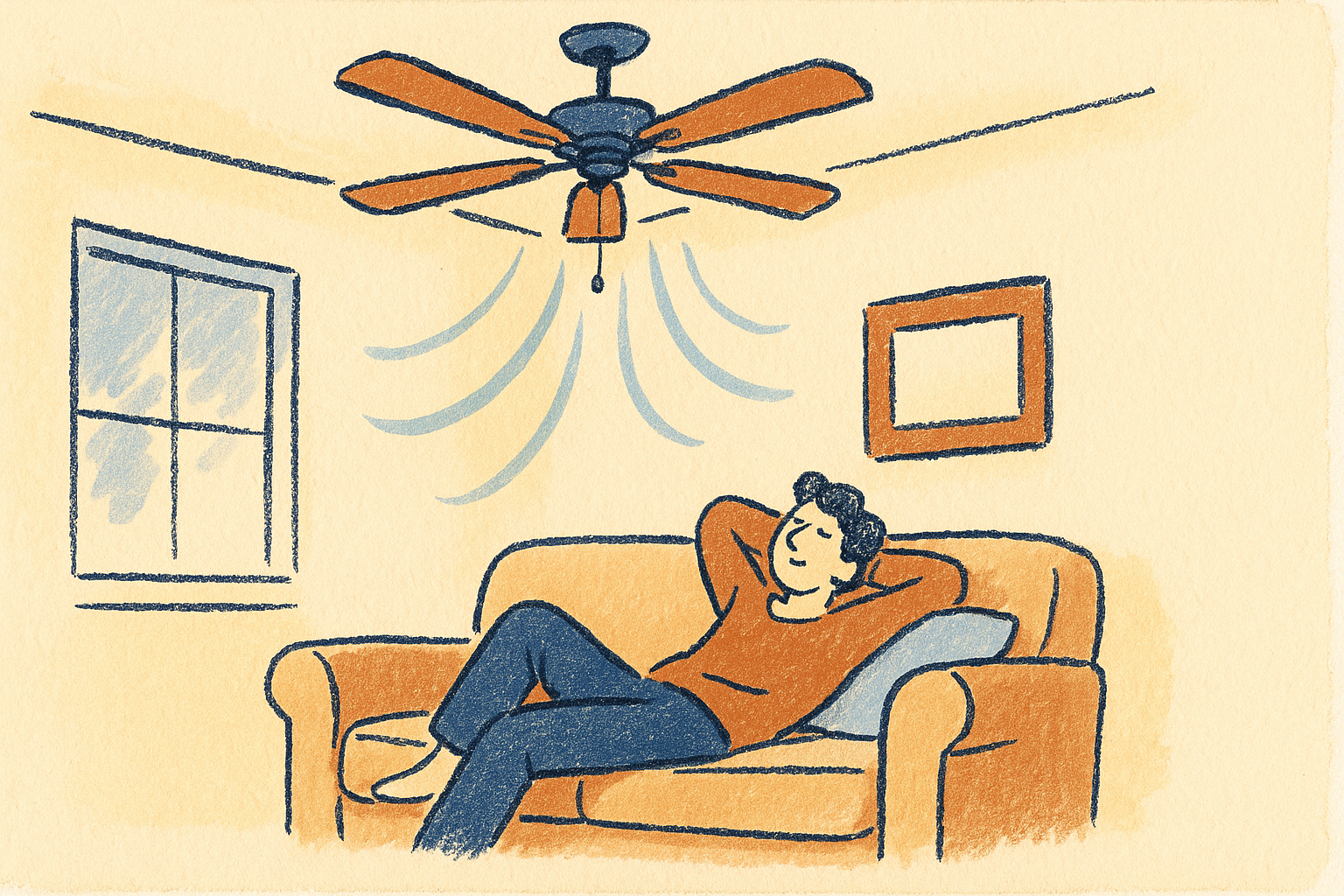
Ceiling fans are the quiet hero here. A fan doesn’t cool the air, it cools you, and moving air can make a room feel as much as 4 degrees cooler than it really is. That’s the trick that makes 78 degrees comfortable. Run a ceiling fan in whatever room you’re in, nudge the thermostat up a couple degrees, and you feel the same while the system works less. Just flip fans off when you leave a room, since they only help people, not empty space.

Time your cooling around SMUD’s peak hours
This one is specific to us. Most Elk Grove homes are on a SMUD time of use rate, which means electricity costs more during the late afternoon and early evening peak, typically the 5 p.m. to 8 p.m. window on summer weekdays. The exact hours and prices change, so check your own plan, but the pattern holds: power is priciest right when everyone gets home and cranks the AC.
The move is to precool your house before the peak starts. Let the system run a little harder in the early afternoon when rates are lower, get the house down to a comfortable temperature, then ease the thermostat up a few degrees when the expensive window hits. A well sealed house holds that cool for a while, coasting you through the priciest hours. If you want the full breakdown of why these bills jump, we dug into it in why SMUD bills spike in July.

Keep the valley heat outside where it belongs
Every bit of sun that pours through a west facing window in the afternoon is heat your AC has to remove. Blocking it before it gets in is cheaper than cooling it after.
Close blinds and curtains on the sunny side of the house during the day, especially those brutal west and south windows that catch the late Sacramento sun. Blackout or light colored curtains work best. If you’ve got trees or an awning shading the house, that’s money in your pocket. Weatherstripping around doors and caulk around older windows keeps the cool air you paid for from leaking out.
Then there’s the stuff that adds heat from the inside. The oven, the dryer, and even a bunch of old light bulbs all throw off warmth your system has to counter. On the worst days, cook on the stovetop or outside, and run the dishwasher and dryer late in the evening after the peak rate window closes. You save twice: less heat, and cheaper power.
A clean system helps lower your AC bills all summer
An air conditioner that’s choking on dirt burns more electricity to do the same job. Maintenance isn’t glamorous, but it’s one of the most reliable ways to lower your AC bills over a full summer.
The filter is the easy one. A clogged filter chokes airflow and forces the system to run longer and harder. Check it monthly during heavy use and swap it when it looks gray and packed, usually every one to three months. It’s a few dollars and five minutes.
Outside, the condenser needs room to breathe. Keep at least a couple of feet clear around the unit, and gently rinse away the dust, grass clippings, and cottonwood fluff that build up on the fins over a valley summer. Inside, the evaporator coil collects grime over time and slowly drags down efficiency, which is why a yearly cleaning pays off. We covered that in why AC coil cleaning matters. A once a year professional AC maintenance visit catches the low refrigerant, weak capacitors, and airflow problems that quietly waste power long before they turn into a breakdown.
Common mistakes that quietly raise your bill
A few habits feel smart but backfire. Cranking the thermostat way down to 65 doesn’t cool the house any faster; the system cools at one steady pace no matter what number you pick, so all you do is overshoot and run longer. Set it where you want it and let it work.
Turning the AC completely off all day in July is another one that sounds thrifty. On a 105 degree afternoon the house soaks up so much heat that your system runs for hours to recover, and it never quite catches up by bedtime. A modest setback beats a full shutoff. And ignoring a system that suddenly runs constantly, ices up, or trips the breaker just runs your bill up while a small problem grows. That’s when it’s worth having a pro take a look.
Key takeaways
The fastest ways to lower your AC bills this summer come down to a handful of habits. Set the thermostat to 78 when you’re home and back it off 7 to 10 degrees when you’re out. Keep the fan on auto and let ceiling fans stretch your comfort. Precool before SMUD’s evening peak, block the afternoon sun, and keep the filter and coils clean. None of it requires new equipment, and together it adds up to a noticeably smaller bill.
Frequently asked questions
What temperature should I set my AC to in the summer?
78 degrees when you’re home is the widely recommended target for balancing comfort and cost. Raise it a few more degrees when you’re away or asleep. If 78 feels warm, add a ceiling fan before you reach for a lower setting.
Does turning the AC off when I leave actually save money?
A moderate setback saves more than a full shutoff on our hottest days. If the house heats up too much, the system works overtime to recover and can erase the savings. Raising the thermostat 7 to 10 degrees while you’re gone is the safer bet.
Will a smart thermostat lower my bill?
It can. Smart thermostats average around 8 percent in cooling savings by adjusting to your schedule automatically, and they make it easy to precool around SMUD’s peak rate window without thinking about it.
How often should I change my air filter in summer?
During heavy summer use, check it monthly and replace it every one to three months. A dirty filter is one of the most common reasons a system runs longer and costs more than it should.
Elk Grove AC Pros is a local HVAC information and lead request service. We are not a licensed contractor, and this article is general information, not professional HVAC advice. Costs, rates, and rebate amounts vary and change, so a licensed local pro should assess your specific system.
Want a system that runs as efficiently as it can before the next heat wave? Request a free, no pressure quote and we’ll connect you with a trusted local pro who can help you keep both your home and your bills in check.