
It usually shows up on the hottest afternoon of the week. The thermostat still reads 78, the vents are still running, but the air sliding out feels more like a warm breath than the cold blast you’re used to. By the time a lot of Elk Grove homeowners notice, the house has already crept past comfortable and someone has muttered the word “Freon.”
So the first question most people ask their tech is simple: can you just add more refrigerant and get me cooling again? Sometimes the honest answer is yes, at least for a while. But a recharge on its own almost never fixes the real problem, and treating it like a quick refill can quietly cost you a lot of money over a Sacramento Valley summer.
Here’s how to think about whether your system needs a recharge, a repair, or a full replacement, and how to tell when a tech is steering you the right way.
What an AC refrigerant recharge actually is
Refrigerant is the fluid that carries heat out of your house. It cycles between your indoor coil and the outdoor unit, absorbing warmth inside and dumping it outside, over and over. An ac refrigerant recharge simply means a technician adds more of that fluid back into the system to bring it up to the level the manufacturer set.
Here’s the part that trips people up. Your air conditioner isn’t like a gas tank that slowly empties as you use it. It’s a sealed system, and the refrigerant is meant to last the entire life of the unit. You should never need to “top it off” as routine maintenance.
So if a tech tells you your charge is low, that fact by itself is the diagnosis. The refrigerant didn’t get used up. It escaped.

Low refrigerant almost always means a leak
This is the single most important thing to understand before you spend a dollar. When your system is undercharged, you have a leak somewhere in the coils, connections, or lines. A recharge puts fluid back in, but if nobody finds and seals the leak, that fluid is going right back out.
You might get a few weeks of cold air. You might even limp to the end of summer. Then next July you’re making the same call, paying for the same refrigerant, and watching it drain away again.
There’s a bigger reason this matters too. Venting refrigerant into the air is bad for the environment and, in many cases, against the rules techs are supposed to follow. If someone offers to just refill you every season without ever mentioning the leak, that’s a red flag, not a favor. A good tech wants to find the leak, show you where it is, and talk through the fix.
Common leak spots include the indoor evaporator coil, the outdoor condenser coil, the copper line set that runs between them, and the connection fittings. Some leaks are cheap and easy to reach. Others sit inside a coil that costs nearly as much as a chunk of a new system. That difference is where the real decision starts.
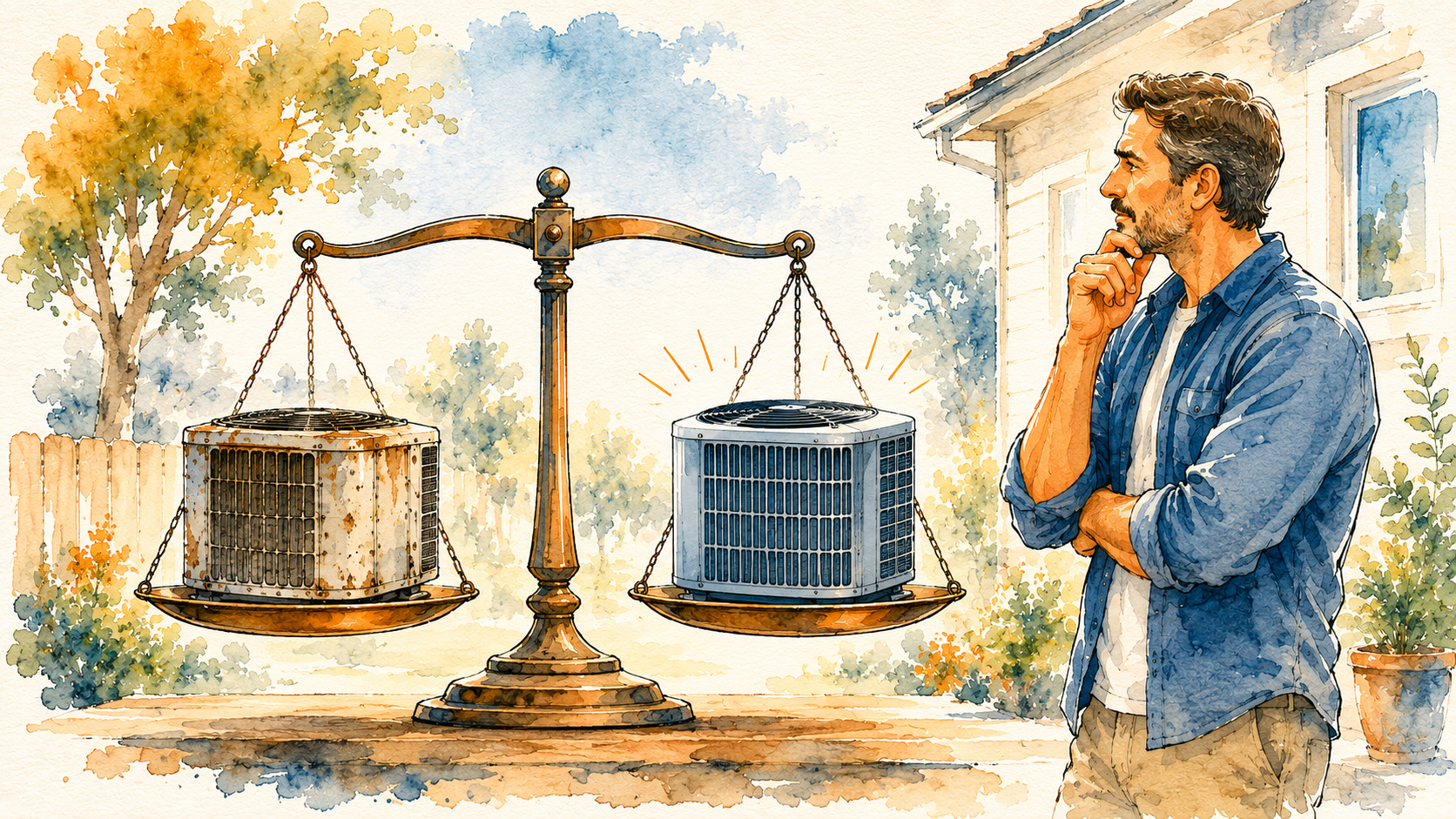
Recharge and repair, or replace? How to decide
Once you know you’ve got a leak, the choice comes down to the age of your system, where the leak is, and what the repair would cost against the value of the unit. Here’s the way an honest local pro tends to weigh it.
When a recharge and repair makes sense
If your air conditioner is under about ten years old, still under warranty, and the leak is in an accessible spot, fixing the leak and recharging the system is usually the smart move. You’ve got years of life left, and a proper repair protects that investment.
Small leaks at a fitting or an accessible section of line are often sealed for a reasonable cost. After the repair, the tech recharges the system to spec, checks the pressures, and confirms it’s holding. That’s a clean fix, and you should feel good about it.
When replacement is the smarter call
The math shifts when the system is older or the leak is expensive to reach. If your unit is fifteen years or older, out of warranty, and leaking from a coil, pouring money into it often just delays the inevitable. Older systems that spring one leak tend to spring another within a year or two.
A common rule of thumb: if a repair would cost more than half the price of a new system, replacement usually wins. You also get a more energy efficient unit that runs cheaper all summer, which matters a lot when Sacramento Valley heat keeps your AC running from June through September. If you’re weighing this, our guide on AC replacement walks through what to expect.
The R410A phaseout changes the recharge math
There’s a new wrinkle that’s hitting Elk Grove homeowners right now, and it’s worth understanding before you approve any refrigerant work. Most systems installed over the last fifteen years or so use a refrigerant called R410A, and that refrigerant is being phased out.
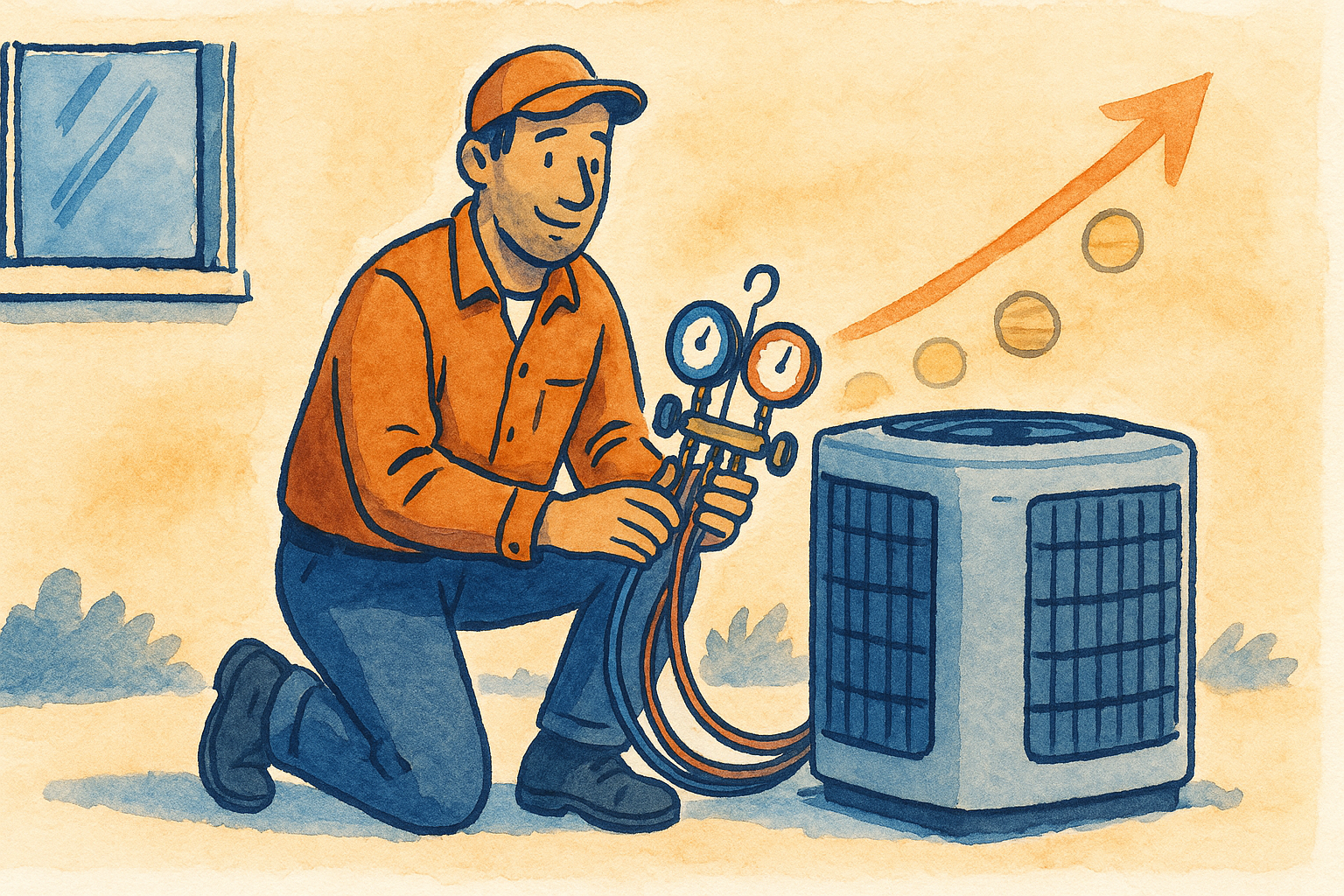
As of 2025, manufacturers stopped building new equipment that uses R410A, moving to lower emission replacements like R454B. Existing R410A systems are still perfectly legal to service and keep running. But as supply tightens, the price of R410A has been climbing fast, which means a recharge on an older system costs more than it used to and will likely cost more next year.
One thing to watch for: your R410A system cannot simply be “switched over” to the new refrigerant. The two aren’t interchangeable, and any tech who claims they can convert your unit to dodge the higher cost is either mistaken or not being straight with you. If your aging system needs a big refrigerant charge, that rising cost is one more reason replacement might pencil out sooner than you’d think.
Prices for refrigerant and repairs change constantly, so treat any number you read online as a ballpark and get a real quote for your specific system.
Common mistakes to avoid
The most expensive mistake is treating a yearly refill as normal. If you’ve recharged the same system two summers in a row, you’re not maintaining it, you’re paying to leak refrigerant into the sky. Push for a leak search instead.
Another one is ignoring the warning signs until the system quits on a 105 degree day. Weak airflow, a unit that runs constantly without cooling, hissing or bubbling sounds near the lines, or ice building up on the copper are all clues that the charge is off. Our post on the warning signs your AC is about to break down covers what to watch for, and if your coils keep frosting over, frozen AC coils is worth a read too.
The last mistake is trying to handle refrigerant yourself. It takes a licensed tech and proper gauges to do this safely and legally, and a wrong charge can damage your compressor, which is the single most expensive part to replace. When cold air stops, the right move is a call to a pro, not a hardware store canister.
Key takeaways
- A healthy AC never runs low on refrigerant, so a low charge means you have a leak, not a system that needs routine refilling.
- A recharge without a leak repair is a temporary patch that you’ll pay for again next summer.
- Repair and recharge when the unit is newer, under warranty, and the leak is accessible.
- Lean toward replacement when the system is fifteen years or older, out of warranty, or leaking from an expensive coil.
- The R410A phaseout is pushing recharge costs up on older systems, which can tip an aging unit toward replacement.
Frequently asked questions
How often should I need an AC refrigerant recharge?
Ideally never. A sealed system holds its charge for life, so needing one points to a leak that should be found and fixed.
Will a recharge make my AC cold again?
Usually yes, at least for a while. But if the leak isn’t sealed, the refrigerant leaks back out and you’re back to warm air before long.
Can I recharge my home AC myself?
It isn’t safe or legal for a homeowner to handle refrigerant. It takes a licensed technician with the right tools to do it correctly and avoid damaging the system.
Is it worth recharging an old R410A system?
Sometimes, if the leak is small and cheap to fix. But with R410A prices rising and older units prone to more leaks, weigh the cost against a newer, more efficient replacement.
If your air conditioner is blowing warm and you suspect a low charge, don’t wait it out through a heat wave. A quick, honest diagnosis tells you whether a simple AC repair will do the trick or whether it’s time to plan ahead. You can learn more about how refrigerant fits into overall home cooling from the U.S. Department of Energy.
Elk Grove AC Pros is a local HVAC information and lead request service. We are not a licensed contractor, and this article is general information, not professional HVAC advice. A licensed local pro should assess your specific system before any repair or refrigerant work. Ready when you are, request a free, no pressure quote and we’ll connect you with a trusted Elk Grove and greater Sacramento technician.