
The first real scorcher of the Elk Grove summer has a way of catching people off guard. One week you’re barely touching the thermostat, and the next it’s 104 degrees by noon and your air conditioner is straining to keep the house livable. That’s usually the moment folks start wondering whether their system got the care it needed before the heat rolled in.
A yearly tune up is the quiet habit that keeps that scramble from happening. It’s a routine visit where a licensed pro cleans, tests, and fine tunes your system so it cools better and costs less when the valley heat really settles in. Knowing what belongs on a proper AC tune up checklist helps you tell a thorough visit from a rushed one, and it helps you keep your unit healthy in the months between.
Here’s what a good tune up covers, when to book one in Elk Grove, and the simple things you can handle yourself so your AC makes it through another Sacramento Valley summer.
What an AC Tune Up Actually Is
An AC tune up is preventive maintenance for your cooling system. It’s a lot like a yearly dental cleaning. Nothing may feel wrong, but a trained eye catches the small problems while they’re still cheap to fix, long before they leave you sweating on the hottest afternoon of the year.
During a visit, a technician inspects the whole system, cleans the parts that get dirty, checks the electrical connections, measures how well the unit is actually cooling, and flags anything that looks like it’s wearing out. A thorough tune up usually takes 60 to 90 minutes. If someone is in and out in fifteen, they almost certainly skipped steps.
The payoff is real. A clean, well adjusted system runs more efficiently, which shows up on your summer energy bill. It also tends to last longer and break down less, which matters a lot in a climate where your AC works overtime from May through September.
The AC Tune Up Checklist: What a Good Pro Covers
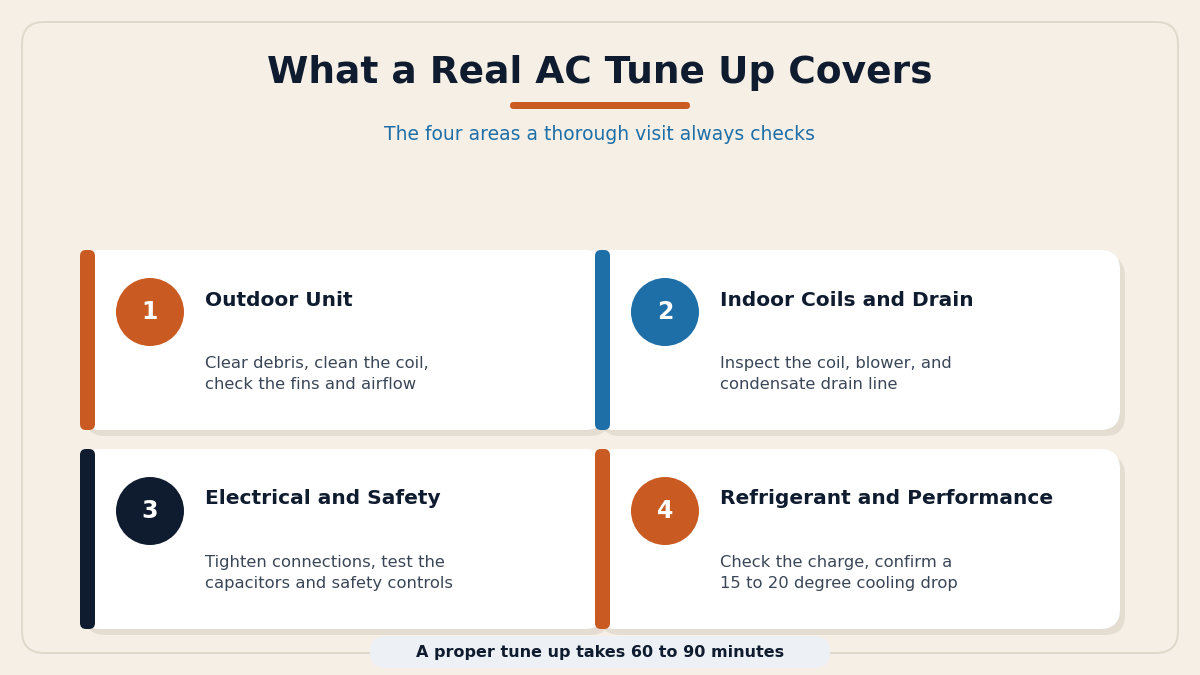
Every company words their checklist a little differently, but a genuine tune up touches four areas. If you know these, you’ll know whether you got your money’s worth.
The outdoor unit
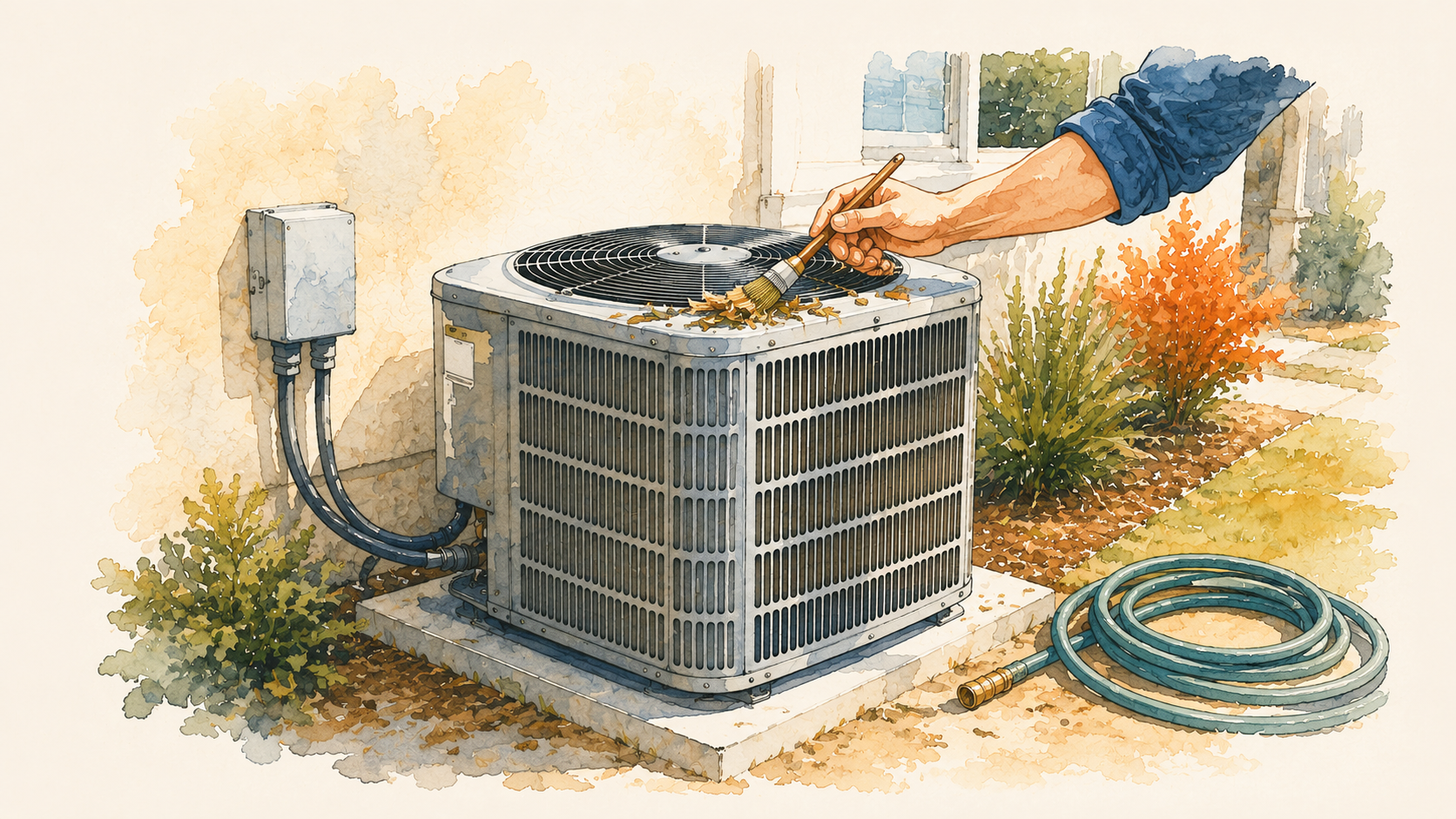
Your condenser sits outside all year collecting leaves, dust, grass clippings, and whatever the wind brings. The tech clears that debris, checks that the fins aren’t crushed or blocked, and makes sure there’s clear space around the unit for airflow. A caked over condenser has to work harder to dump heat, and in our summers it can push a struggling unit over the edge.
The outdoor coil gets special attention. When it’s coated in grime, your system loses its ability to release heat, and cooling suffers. This is closely tied to coil cleaning, one of the most valuable parts of any maintenance visit.

The indoor unit and coils
Inside, the technician checks the evaporator coil for dirt and looks at the blower that pushes cool air through your home. A dirty blower or coil chokes airflow, so some rooms never quite cool down. They’ll also inspect the condensate drain line, the small pipe that carries away the water your AC pulls from the air.
That drain line matters more than most people think. When it clogs, water backs up and can spill onto your floor or ceiling. Clearing it during a tune up is a five minute job that prevents an expensive mess.
The electrical and safety checks
Loose or corroded electrical connections are a leading cause of AC breakdowns and, in the worst cases, a fire risk. The tech tightens connections, looks at the wiring for heat damage or rodent chewing, and tests the capacitors and contactors that help your system start and run.
They also confirm the safety controls shut the system down properly if something goes wrong. This is the part of the checklist you can’t do yourself, and it’s one of the strongest reasons to have a licensed pro handle the visit.
Refrigerant and performance
Finally, the technician measures how well your system is really cooling. They check the refrigerant charge and inspect the lines for oily spots that hint at a leak. Then they measure the temperature of the air going into the return and the air coming out of a vent. A healthy system usually shows a 15 to 20 degree drop between the two.
They’ll also make sure your thermostat reads the temperature accurately and that the system cycles on and off the way it should. If the numbers are off, that’s an early clue something needs attention before it turns into a hot day breakdown. These are exactly the kinds of small warnings that show up on our list of signs an AC is about to break down.
When to Schedule a Tune Up in Elk Grove
The best time is spring, before the first heat wave. Once triple digit weather hits, every HVAC company in the greater Sacramento area gets slammed, and the calm scheduling window disappears fast. Booking in March or April means your system is ready when you actually need it.
The general rule is once a year for a standard AC. In our climate, though, your system runs hard for a long stretch, so some homeowners with older units or a heat pump that also runs in winter choose to have it looked at twice a year. If you missed spring this year, it’s still worth booking now rather than waiting for a breakdown.
Regular visits are the heart of good AC maintenance, and they’re a lot cheaper than the emergency call you’ll make if the system quits during a July heat wave.

What You Can Do Yourself Between Visits
A pro handles the technical work, but a few easy habits keep your system happy the rest of the year. None of these require tools or training.
Change your air filter regularly. This is the single most important thing you can do. Most homes need a fresh filter every one to three months, and closer to every month or two if you have pets or someone with allergies. A quick test: hold the filter up to a light, and if you can’t see through it, it’s time to swap it out.
Keep the outdoor unit clear. Trim back plants, pull weeds, and gently rinse off dust and cottonwood fluff with a garden hose on a low setting. Give the unit a couple of feet of breathing room on all sides.
Leave your vents open. It feels logical to close vents in unused rooms, but that actually raises the pressure in your ductwork and makes the whole system work harder. Keep them open so air moves freely.
Listen and watch for changes. New rattles, weak airflow, or a slow creep upward in your energy bill are all worth a call before they become a full breakdown.
Common Mistakes Homeowners Make
The biggest one is skipping maintenance entirely until something breaks. An AC rarely fails without warning. It usually gives you months of small hints, and a tune up is where those hints get caught.
Another is chasing the cheapest possible deal. A 19 dollar tune up advertised online often turns into a quick glance and a sales pitch. You want a real inspection, not a foot in the door. Ask what the visit actually includes before you book.
People also wait too long to schedule. By the time the heat is brutal, the good appointment slots are gone. And plenty of homeowners forget the filter between visits, which quietly undoes a lot of the good a tune up does. A clean system with a clogged filter still can’t breathe.
Key Takeaways
An AC tune up is a yearly checkup that keeps your system running cool, efficient, and reliable through a long valley summer. A real one takes an hour or more and covers four areas: the outdoor unit, the indoor coils and drain, the electrical and safety controls, and the refrigerant and performance numbers.
Book it in spring before the heat arrives, change your filter every one to three months, keep your outdoor unit clear, and don’t wait for a breakdown to pay attention. That short AC tune up checklist is most of what stands between you and a miserable, sweaty afternoon in August.
Frequently Asked Questions
How much does an AC tune up cost? Prices vary by company and by what’s included, so it’s best to ask for a clear quote up front. Be cautious with rock bottom offers that sound too good to be true, since they often skip the important steps.
How long does a tune up take? A thorough one usually runs 60 to 90 minutes. If it’s much shorter, chances are corners were cut.
Do I still need a tune up if my AC seems fine? Yes. The whole point is catching small issues while your system still feels fine, so they don’t turn into a costly failure on the hottest day of the year.
Can I do a tune up myself? You can handle filters, clearing the outdoor unit, and keeping vents open. The electrical checks, refrigerant readings, and coil cleaning should be left to a licensed pro with the right tools and training.
Elk Grove AC Pros is a local HVAC information and lead request service, not a licensed contractor. This article is general information and not professional HVAC advice, and a licensed local pro should assess your specific system. If you’d like your AC looked at before the next heat wave, request a free, no pressure quote and we’ll connect you with a local pro.